
The Invisible Boundary: Luxury Estates and Mexico’s Coastal Law
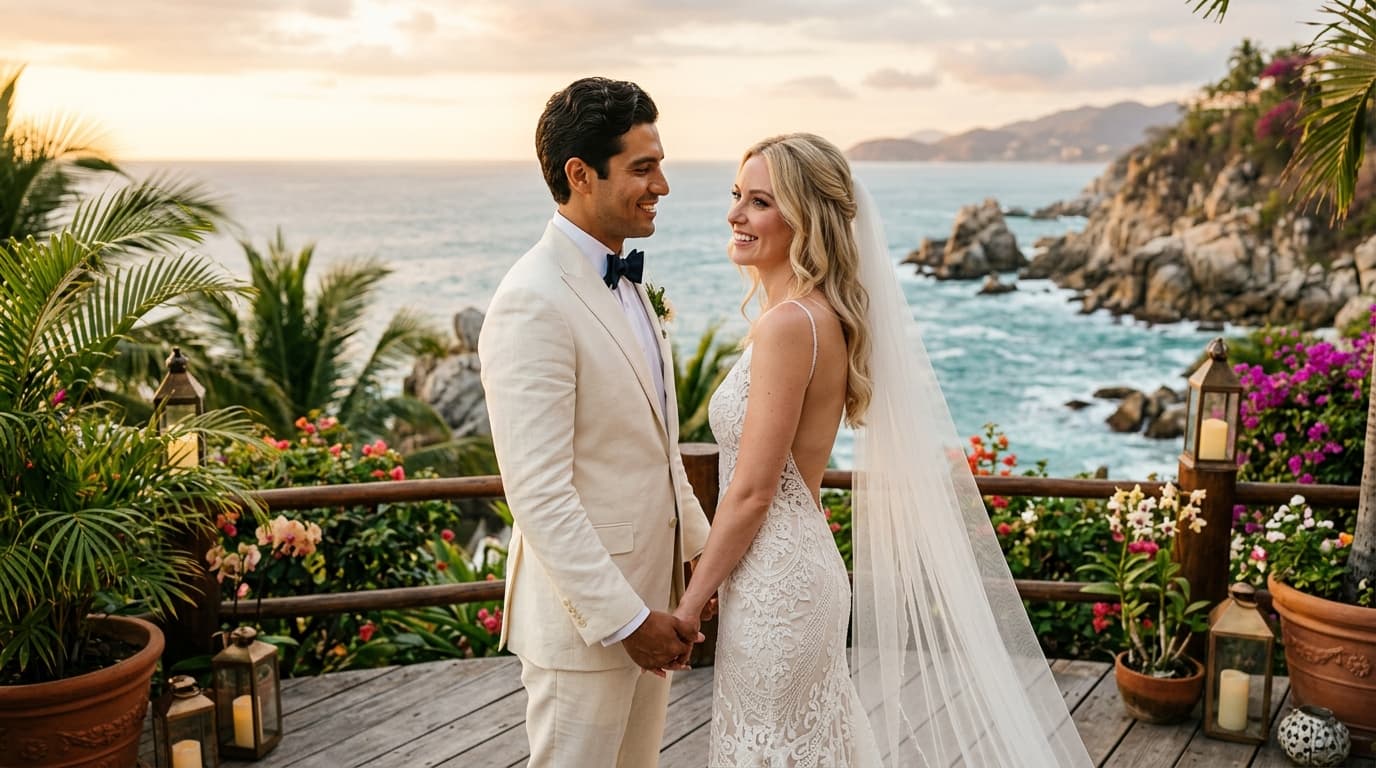
For discerning couples dreaming of an intimate exchange of vows where high-design architecture meets the roaring surf of Banderas Bay, oceanfront villas in exclusive enclaves like Lower Conchas Chinas, Amapas, and Mismaloya represent the apex of destination luxury. However, executing a seamless event along the Pacific waterline requires navigating a sophisticated legal landscape. Beyond the private gated entrances of these residential estates lies Mexico’s federal coastal strip—a regulated zone where marine conservation, public access laws, and municipal building restrictions intersect.
Understanding the distinction between private deeded property and the Zona Federal Marítimo Terrestre (ZOFEMAT) is essential for high-end wedding planners, production teams, and couples alike. When structural builds, expansive floral installations, or private dining platforms extend toward the high-tide line, navigating ZOFEMAT compliance becomes the foundation of a flawless, stress-free celebration.
Decoding ZOFEMAT: High-Tide Lines and Federal Jurisdiction
Under Mexican constitutional law, all naturally occurring beaches and coastal waters are public domain. ZOFEMAT refers specifically to the 20-meter strip of usable land contiguous to the highest astronomical tide line (pleamar). While an estate in Lower Conchas Chinas may possess private land grants reaching down the granite cliffside, any setup touching sandy shores, rocky outcrops submerged during high swells, or coastal access points falls directly under federal jurisdiction managed by SEMARNAT (Secretaría de Medio Ambiente y Recursos Naturales) and monitored by PROFEPA.
For villa weddings, this legal reality creates two distinct operational zones:
- Deeded Private Grounds: The manicured lawns, infinity pool decks, and private terraces situated safely above the 20-meter mark. These areas remain entirely governed by the villa owner’s private usage rules and local municipal noise and event guidelines.
- The Federal Maritime Zone: The sandy cove, beach frontage, or coastal rock platforms below the high-tide threshold. Staging a ceremony arch, guest seating, micro-lighting, or private catering setups on this land requires temporary concession permits or special-use authorizations.
Securing Temporary Coastal Permits and Environmental Compliance
Transforming a pristine stretch of Puerto Vallarta beach into an exclusive ceremony venue demands meticulous administrative lead time. High-production villa weddings requiring temporary structures—such as elevated hardwood walkways over sand, temporary tide-resistant staging, or heavy rigging for canopy floral arches—must submit an environmental and spatial impact plan to municipal maritime authorities and SEMARNAT.
Key legal considerations for temporary event authorizations include:
- Zero-Trace Environmental Preservation: Permits mandate that no permanent fixtures be driven into native granite rock formations or coastal sand dunes. All decor, flooring, and lighting rigs must be fully free-standing and strikeable within hours.
- Sea Turtle Protection Protocols: From May through November, Puerto Vallarta’s beaches serve as crucial nesting grounds for Olive Ridley sea turtles. Event lighting along the ZOFEMAT zone must utilize warm-spectrum amber LEDs angled away from the ocean, avoiding high-intensity spotlights that disorient nesting females or hatchlings.
- Acoustic and Power Distribuion Limits: Generators powering beachfront setups must meet strict decibel thresholds and be situated on non-permeable spill trays outside the federal zone to protect fragile coastal soil from fuel contamination.
Managing Tide Dynamics, Ocean Swells, and Structural Engineering
Beyond legal paperwork, the geography of Banderas Bay requires rigorous structural engineering. The coastal topography varies dramatically between regions. While estates in Punta Mita often enjoy expansive, gently sloping beaches, villas carved into the emerald cliffs of Mismaloya and Southern Conchas Chinas experience narrower coves subject to dramatic tidal shifts and seasonal Pacific swells.
A sophisticated production plan involves studying local nautical tide tables months in advance. A ceremony space constructed on dry sand at 10:00 AM can easily succumb to aggressive afternoon high tides during full moon cycles or late-summer swells. Luxury production crews engineer temporary oceanfront platforms with weighted ballast systems rather than ground stakes, elevating guest seating above potential spray zones while ensuring structural integrity without damaging the underlying coastal ecosystem.
Balancing Federal Public Access with Discreet Event Privacy
A common concern for high-profile couples hosting private villa weddings is maintaining absolute privacy along a coastline defined by federal public access laws. While federal law prohibits private entities from physically fencing off public beaches or blocking coastal corridors, strategic design and diplomatic coordination achieve effortless exclusivity.
Master planners utilize visual zoning and soft architectural barriers rather than solid enclosures. Lush native floral hedge lines, structural timber pergolas positioned along the villa’s lower perimeter, and artful bamboo or sheer drapery establish clear visual boundaries that discourage casual beachgoers from wandering into event spaces. Furthermore, hiring licensed security personnel familiar with maritime regulations ensures that soft perimeters are maintained respectfully and in full compliance with local ordinances.
The Recommended Lead Time and Logistics Checklist
To guarantee a smooth, legally compliant oceanfront villa wedding in Puerto Vallarta, production timelines must align with federal administrative cycles:
- 8 to 12 Months Out: Verify property boundary surveys with your villa management and event planner to determine exactly where deeded private property ends and the federal zone begins.
- 6 Months Out: Submit formal temporary-use permit requests to SEMARNAT and local municipal authorities if any portion of the ceremony, cocktail hour, or dining setup touches the sand or ZOFEMAT zone.
- 60 Days Out: Conduct a joint site inspection with your structural production team, assessing seasonal swell patterns, high-tide marks, and generator placement logistics.
- Event Week: Coordinate directly with local maritime patrols and ensure all environmental compliance documentation, including turtle conservation clearances, is printed and held on-site by the lead event director.
By respecting Puerto Vallarta’s pristine coastal ecology and mastering the legal nuances of ZOFEMAT regulations, luxury villa weddings deliver an unparalleled fusion of natural Pacific splendor and flawless architectural sophistication.