
The Dynamic Edge: Navigating Banderas Bay’s Coastal Topography
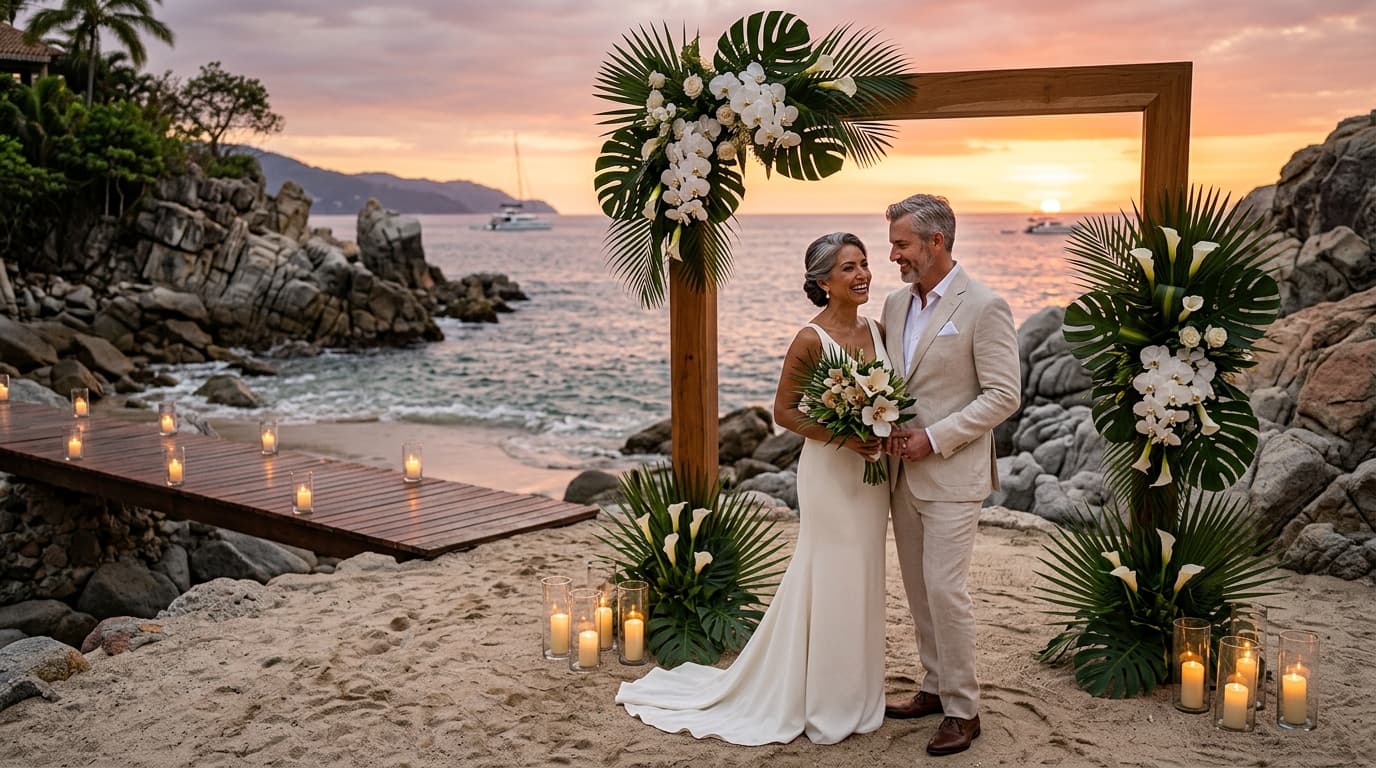
Hosting a luxury beach ceremony along the iconic shores of Puerto Vallarta demands more than an eye for aesthetic symmetry; it requires a sophisticated understanding of oceanographic dynamics. Banderas Bay is one of the world’s deepest natural bays, framed by the dramatically rising peaks of the Sierra Madre Occidental. This unique geological formation creates diverse coastal micro-environments—from the expansive, gently sloping alluvial sands of Marina Vallarta and Nuevo Vallarta to the dramatic, granite-strewn private coves of Conchas Chinas and Amapas.
For ultra-luxury celebrations, high-design spatial planning must account for the fluid nature of the Pacific Coast. Designing a shoreline event footprint requires transforming the tide from an unpredictable variable into a curated design element. By anticipating hydro-tidal shifts, micro-swell patterns, and coastal erosion lines, luxury wedding planners craft seamless, tide-responsive celebrations that balance high-fashion design with environmental resilience.
Hydro-Tidal Calculations: Navigating Lunar Cycles and Seasonal Swells
The key to mastering coastal event architecture along Jalisco’s coast lies in predicting tide variance and swell vectors. The tidal range in Banderas Bay generally fluctuates between 0.8 to 1.5 meters, but the interaction of lunar cycles and seasonal Pacific swells can dramatically compress usable beachfront footprints within hours.
Spring Tides vs. Neap Tides in Private Coves
During full and new moons, spring tides generate maximum water displacement, resulting in significantly higher high tides and lower low tides. In narrow, secluded coves like those found near Mismaloya or Playa Las Gemelas, a high spring tide combined with a long-period winter Pacific swell (commonly occurring between November and March) can diminish beachfront floor space by up to forty percent. Advanced event mapping uses precise bathymetric data to pinpoint the absolute high-water mark, guaranteeing that ceremony arches, custom seating, and guest lounges remain untouched by encroaching surf.
Analyzing Thermal Wind Profiles and Wave Drift
Beyond water levels, the daily thermal wind transition—where cool ocean breezes shift as the Sierra Madre warms in the early afternoon—creates localized wind-driven chop. Aligning your structural layouts with natural cliff contours in the South Zone (Zona Sur) offers natural wind deflection, preserving high-concept floral installations, delicate linen drapes, and precise acoustic clarity.
The Three-Zone Shoreline Model: Curating Fluid Event Footprints
To deliver an uncompromised experience of coastal luxury, top-tier production teams implement a Three-Zone Shoreline Model. This architectural framework categorizes the beach canvas into distinct elevation tiers, ensuring that guest comfort, structural stability, and event flow remain undisturbed throughout the evening.
- Zone 1: The Intertidal Ceremony Platform (Low-Water Fringe) — Used exclusively during low tide for intimate, short-duration moments like the vow exchange. Equipment in this zone relies on low-impact, modular elevated plinths that allow natural water movement beneath the structure without shifting sand integrity.
- Zone 2: The Transitional Dry-Sand Lounge (Mid-Beach Escarpment) — Positioned safely above the maximum daily high-tide line, this area houses soft-seating lounge groupings, cocktail bars, and interactive stations. Foundations here are anchored using weighted, concealed sub-flooring engineered to absorb natural sand compression.
- Zone 3: The Elevated Terrace or Escarpment Platform (High-Tide Sanctuary) — Set upon natural granite bluffs, luxury villa terraces, or reinforced coastal boardwalks (such as those at premier South Zone estates). This elevated tier hosts the formal multi-course dinner and high-energy dancing, providing uninterrupted views of the Pacific while remaining entirely immune to ocean surges.
Engineering Tide-Resilient Event Structures
Building a high-design installation on living sand demands non-invasive engineering that respects the delicate coastal ecosystem while adhering to strict local marine regulations. In Puerto Vallarta, installations operating near the water edge must coordinate closely with environmental protections outlined by federal coastal zone authorities (ZOFEMAT).
Sub-Surface Anchoring and Weight Distribution
Standard stakes and lightweight sand anchors are wholly inadequate for luxury coastal builds exposed to sea breezes and shifting substrates. Custom-engineered floor modules utilize wide-footprint distribution plates covered in natural local palm fibers or fine quartz sand, creating invisible stability. Structural arches and heavy light rigging are secured with internal, counter-weighted ballast tanks filled with recirculated water, which can be drained post-event without leaving a footprint or introducing synthetic materials to the marine edge.
Hydrophobic Textiles and Micro-Climate Furniture Curation
Ocean mist and rising ambient humidity at dusk can weigh down delicate natural fabrics. High-design coastal curation utilizes custom-treated, hydrophobic linens that repel salt spray while maintaining the soft hand-feel of rich Belgian flax or silk-cotton blends. Furniture choices emphasize kiln-dried teak, powder-coated marine-grade aluminum, and treated hardwoods that naturally resist humidity-induced swelling, ensuring immaculate presentation from cocktail hour through the midnight departure.
Sensory Integration: Transforming Hydro-Dynamics into Experiential Luxury
When tide-responsive spatial planning is executed flawlessly, the natural rhythm of Banderas Bay becomes the backdrop for an elevated sensory journey. Guest arrival pathways, illuminated by recessed warm LED strips embedded along natural granite edges, lead guests downward from cliffside entryways to the shoreline canvas just as the tide reaches its lowest ebb.
As the sun dips behind the horizon near the iconic Los Arcos Marine Park, natural ambient twilight amplifies the dramatic geometry of the shoreline. The sound of surf gently echoing off cliff walls serves as acoustic white noise, perfectly tuned alongside custom sound design. By respecting the natural physics of Puerto Vallarta's marine landscape, destination wedding designers create atmospheric, highly polished celebrations that feel seamlessly woven into the raw beauty of the Mexican Pacific.