
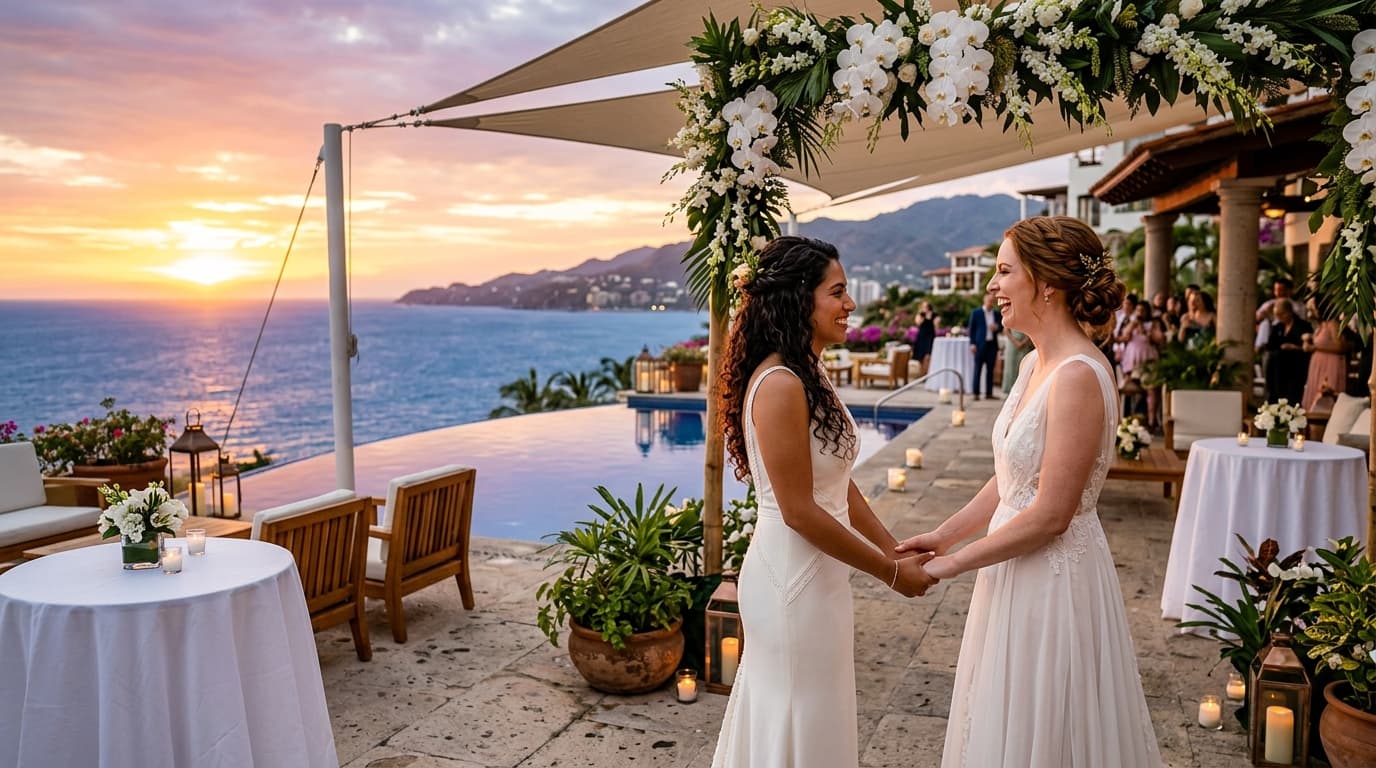
High above the crystalline turquoise waters of Banderas Bay, the cliffside estates of Conchas Chinas, Amapas, and Mismaloya represent the absolute pinnacle of luxury destination weddings in Puerto Vallarta. These multi-tiered architectural masterpieces offer unmatched panoramic ocean vistas, dramatic stone verandas, and romantic open-air footprints. However, orchestrating an unforgettable celebration on an exposed coastal cliff demands a deep understanding of hyper-local atmospheric conditions. To maintain an atmosphere of effortless elegance, top-tier wedding planners must engineer thermal comfort with the same precision applied to floral design or fine dining.
Integrating environmental spatial curation with sophisticated micro-climate engineering ensures guests remain refreshed, comfortable, and fully engaged from the first afternoon vows through late-night celebrations under the stars. Below is our definitive guide to mastering micro-climate architecture for private villa weddings along Puerto Vallarta’s breathtaking South Shore.
Understanding Banderas Bay Micro-Meteorology
Puerto Vallarta’s unique topography—where the dramatic peaks of the Sierra Madre Occidental plummet directly into the ocean—creates distinct localized micro-climates. Oceanfront cliffside villas experience complex atmospheric dynamics that differ significantly from flat beach resorts or inland valley estates.
- Radiant Heat Absorption: Travertines, local cantera stone, and light-toned concrete terraces common in Conchas Chinas villas absorb intense solar radiation throughout the day, re-radiating heat upward during late-afternoon ceremonies.
- Diurnal Wind Shifts: Thermal differentials between the Pacific Ocean and the mountain range drive predictable wind patterns. Offshore coastal breezes peak during late afternoon, transitioning rapidly into downward mountain breezes (terrales) after dusk.
- Humidity Traps: Sheltered villa alcoves and walled courtyards can trap lingering coastal humidity if cross-ventilation pathways are obstructed by heavy draping or improper seating layouts.
Solar Path Mapping and Custom Shade Structures
Achieving optimal thermal comfort begins months before the event by calculating the exact solar trajectory over the villa layout on your wedding date. An afternoon ceremony in April presents completely different shadow lines than one held in November.
Architectural Tensile Sails and Stretch Tents
Instead of bulky commercial pop-ups that obscure ocean views, luxury villa designers utilize bespoke, high-tension sailcloth structures and custom stretch canopy tents. Fabricated in breathable, UV-blocking matte creams and soft whites, these architectural installations are anchored discreetly to existing villa beams or reinforced terrace perimeters. Engineered with precise tilt angles, they cast essential shade across guest seating areas while maintaining uninterrupted sightlines to the horizon.
Draped Pergola Micro-Zones
Creating designated shaded micro-zones across sprawling terrace levels prevents heat exhaustion during cocktail hour. Overhead pergolas lined with sheer, floating linen or semi-permeable natural bamboo slats filter harsh direct sunlight into soft, ambient illumination. This spatial strategy encourages guest movement while providing instantaneous relief from radiant solar heat.
Engineering Natural Airflow and Wind-Breeze Corridors
Relying solely on passive shading is insufficient during peak warmth; active air movement is mandatory for maintaining guest comfort. By leveraging the natural marine breezes that sweep across Banderas Bay, planners can direct continuous fresh air across key event zones.
Unobstructed Cross-Ventilation Layouts
When positioning ceremony arches, lounge seating, and dining tables, spatial planners must preserve natural wind channels. Solid backdrops, heavy vinyl signage, or dense greenery walls should never be placed directly perpendicular to incoming sea breezes. Instead, utilize semi-porous structural backdrops—such as open-weave rattan screens, spaced timber louvers, or delicate floral lattice work—that allow cooling ocean air to pass freely through the space.
Integrated Silent Ventilation Systems
In sheltered terrace pockets where natural breeze stalls, discreet mechanical airflow is essential. Ultra-quiet, high-RPM architectural floor fans, wrapped in hand-woven wicker or matte brass housings, seamlessly blend into luxury lounge decor while maintaining gentle air turnover across guest dining tables.
Invisible Evaporative Cooling Technology
To drop ambient temperatures on open-air stone verandas without compromising luxury aesthetics or guest attire, advanced high-pressure evaporative cooling systems offer an ideal solution.
Commercial-grade misting systems operating at 1,000 PSI atomize purified water into ultra-fine micro-droplets (5 to 10 microns). These droplets evaporate instantly in the air—a process known as flash evaporation—reducing the localized ambient air temperature by up to 15 degrees Fahrenheit without generating surface wetness. When strategically concealed within overhead floral installations, perimeter palm fronds, or under custom perimeter valances, these systems deliver invisible, transformative cooling along cliffside terraces.
Climate-Resilient Decor Materials and Tactile Curation
Thermal comfort extends directly to tactile interaction. Touchpoints that absorb heat or trap moisture can subtly detract from the luxury guest experience.
- Breathable Textiles: Select natural 100% Belgian linens, washed cottons, and lightweight silk blends for dining tables and soft seating. Synthetic polyesters trap ambient heat against the skin and should be strictly avoided.
- Heat-Neutral Furniture Surfaces: Dark metal chairs and unshaded polished dark stone surfaces absorb extreme heat under afternoon sun. Opt for teak, light ash wood, upholstered cane-back seating, or powder-coated aluminum in light ivory tones.
- Hydration Architecture: Establish elevated, continuously serviced hydration stations featuring infused mountain water, chilled local botanical elixirs, and iced Mexican citrus spritzes near guest entry points prior to ceremony seating.
Atmospheric Transitions: From Golden Hour to Evening Terrales
As the sun sets over Cabo Corrientes, thermal dynamics shift rapidly. The intense afternoon sun yields to cool mountain drafts flowing down through the jungle canopy. Executing a seamless thermal transition ensures guest comfort throughout the evening.
As ambient temperatures drop post-twilight, transition open-air terraces by introducing soft radiant heating elements, such as sleek bronze flame towers or built-in stone fire features. Replacing daytime shade structures with exposed overhead bistro lighting or starlight canopy installations captures the breathtaking transition from sunset to nightfall, elevating the magic of your luxury villa wedding in Puerto Vallarta.