
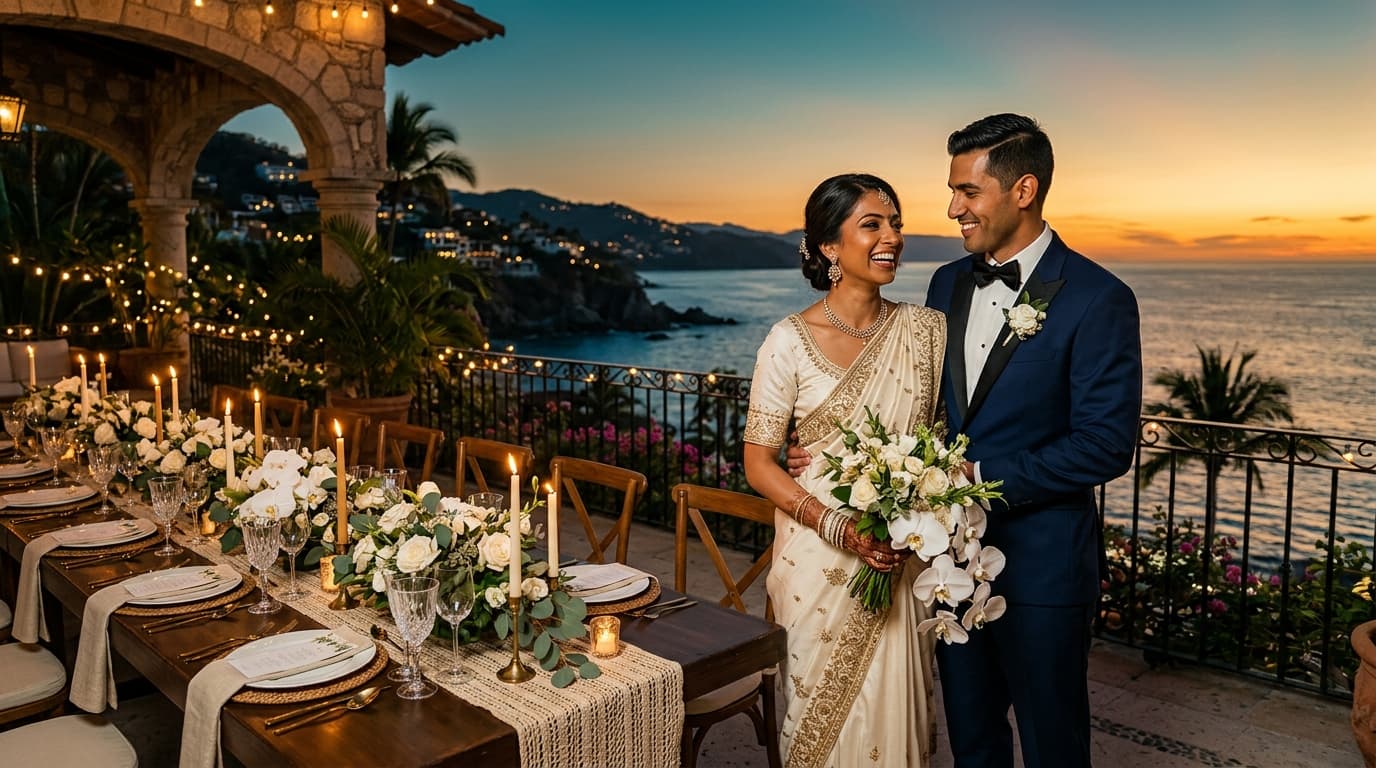
Private estate weddings in Puerto Vallarta offer unmatched intimacy, sweeping Pacific horizons, and architectural splendor. From the cliffside sanctuaries of Conchas Chinas and Amapas to the sprawling beachfront compounds of Sierra del Mar and Mismaloya, these residential gems provide a regal backdrop for a celebration. However, executing a multi-course, restaurant-quality wedding banquet within a private home presents a complex logistical puzzle. Luxury residential kitchens—regardless of their square footage or high-end domestic appliances—are fundamentally not engineered to support high-volume, simultaneous fine-dining service for dozens or hundreds of guests.
To achieve culinary excellence without compromising the villa’s aesthetic or structural integrity, premier wedding producers deploy temporary culinary field infrastructure. This technical behind-the-scenes strategy converts outdoor utility zones into fully functional, health-compliant satellite kitchens capable of delivering Michelin-caliber tasting menus under demanding tropical conditions.
The Spatial and Technical Constraints of Residential Estate Kitchens
While a villa’s primary kitchen may feature commercial-grade ranges or marble island counters, utilizing it as the primary prep and plating zone for a full wedding reception poses severe operational risks. Domestic plumbing traps, residential ventilation hood capacities, and residential refrigeration units are not calibrated for continuous, heavy thermal output or high-frequency door openings in sub-tropical temperatures.
Moreover, housing a brigade of ten to fifteen chefs, expeditors, and stewards inside the main residence creates unwanted foot traffic, noise, and heat within guest-facing areas. To maintain the tranquil, refined atmosphere of the main residence, professional culinary teams isolate food production to a dedicated field kitchen annex. This temporary structure is usually constructed in a discreet service yard, parking apron, or reinforced side terrace out of sight and earshot of the main reception spaces.
Designing the Satellite Culinary Field Annex
Constructing a pop-up commercial kitchen on a private estate requires precise spatial mapping, load-in planning, and heavy utility orchestration. A professional field kitchen operates under strict hygiene and spatial flow parameters, replicating the linear efficiency of a modern restaurant brigade.
1. Heavy Equipment & Utilities
Unlike standard catering setups that rely solely on Sterno cans and pre-heated hot boxes, fine-dining wedding menus require precise thermal control. Satellite kitchens utilize specialized mobile commercial equipment, including portable convection ovens, induction cooktops, precision sous-vide immersion circulators, and blast chillers. Water supply lines must be piped in using food-grade hoses equipped with high-pressure filtration systems, while graywater discharge requires sealed holding tanks to protect local flora and coastal groundwater.
2. Modular Enclosures and Climate Isolation
The field annex must be sheltered within heavy-duty, climate-controlled clear-span tents equipped with flame-retardant walls and elevated composite flooring. High-capacity commercial air-handling units maintain ambient temperatures inside the plating zone between 68°F and 72°F (20°C–22°C). This temperature control is critical to prevent warm Banderas Bay evening breezes from wilting delicate micro-greens, melting sculpted butter pat foundations, or destabilizing delicate emulsions prior to service.
Cold-Chain Preservation and Local Ingredient Logistics
Maintaining an unbroken cold chain is essential for seafood safety and ingredient crispness in Puerto Vallarta’s warm tropical climate. High-end menus frequently feature delicate Pacific seafood—such as red snapper, totoaba, or Pacific spiny lobster harvested fresh off the coast of Punta de Mita or the Yelapa bay—alongside imported artisanal dairy and prime aged meats transported from regional hubs like Guadalajara.
- Refrigerated Transport Sprinters: Raw ingredients are held in dedicated mobile refrigeration vans parked on-site, serving as primary cold storage throughout the event build-up.
- HACCP-Compliant Prep Sequences: Prep schedules are structured so that high-risk items remain in chilled holding units until the exact moment of final assembly and thermal processing.
- Purified Ice Infrastructure: High-volume commercial ice generators producing triple-filtered ice are installed strictly for raw bar displays, cocktail programs, and rapid ice-bath cooling steps during culinary prep.
Synchronized Service Architecture: The Expediting Bridge
Delivering 100 or 200 piping-hot, beautifully composed plates within a 15-minute window requires an unbroken logistics chain between the hidden field annex and the dining tables on the oceanfront terrace. This link is governed by an expediting bridge—a hidden staging area equipped with high-intensity infrared heat lamps and pass-through tables.
Service captains coordinate with the culinary brigade via discreet earpieces, timing dish call-outs down to the second. Butler routes are mapped to avoid guest traffic jams, ensuring that servers traverse paved, non-slip rubber runners hidden under ambient landscape lighting. This guarantees that a pan-seared sea bass or prime tenderloin arrives at the guest's table at precise serving temperature, retaining its structural integrity and moisture profile.
Elevating Local Gastronomy and Authentic Culinary Traditions
A sophisticated culinary infrastructure does not merely serve European fine-dining techniques; it honors the rich, dynamic gastronomic heritage of Jalisco and Nayarit. By equipping the field annex with traditional tools—such as custom-fabricated volcanic stone comales and open-fire wood charcoal grills—chefs can seamlessly integrate regional Mexican techniques into an elevated multi-course format.
Guests can enjoy tableside pairings of rare artisanal raicillas from the Sierra de Manantlán, blue corn tortillas pressed to order on-site for late-night gourmet trasnochado bites, or fresh ceviches finished with cold-pressed local lime and native chili oils. By combining robust temporary engineering with deep regional culinary appreciation, a private Puerto Vallarta villa transforms into an unforgettable gastronomic destination for the most discerning luxury host.