
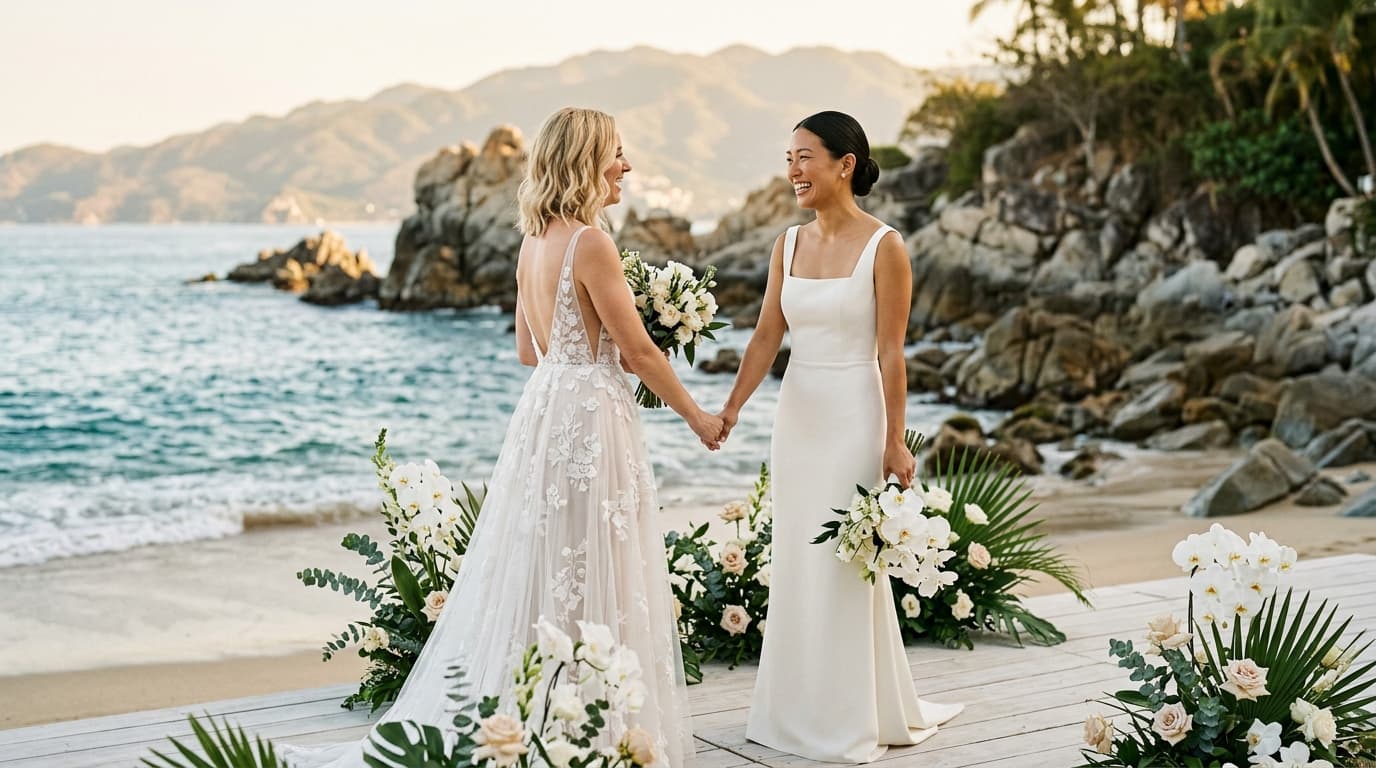
The Precision Science of Banderas Bay Shoreline Ceremonies
Exquisite coastal events are born from an uncompromising understanding of nature’s architecture. In Puerto Vallarta, where the emerald foothills of the Sierra Madre Occidental slope directly into the deep blue expanse of Banderas Bay, the shoreline is an ever-shifting canvas governed by ocean hydrology and solar mechanics. For a high-end beach ceremony, luxury is defined by seamless execution—ensuring that the tide provides a dramatic backdrop without encroaching upon velvet aisles, and that the Pacific sun illuminates vows without blinding guests or washing out heirloom photography.
Achieving this level of perfection requires moving beyond basic sunset estimates. It demands hyper-local spatial planning, rigorous calculation of tidal cycles, and meticulous mapping of micro-topography along Puerto Vallarta’s distinct coastal zones. From the intimate granite inlets of Conchas Chinas to the expansive, golden sands of Playa Palmares, orchestrating a tide-synchronous ceremony transforms natural coastal dynamics into a bespoke luxury experience.
Navigating Banderas Bay’s Tidal Patterns and Hydrology
While Banderas Bay enjoys protection from open-ocean swells, it experiences mixed semi-diurnal tides—meaning two high tides and two low tides of unequal height occur each solar day. The variance between mean low water and spring high tide can alter available beach width by up to twenty-five feet, fundamentally altering spatial layouts within a matter of hours.
Spring Tides vs. Neap Tides on Puerto Vallarta Beaches
Understanding lunar cycles is critical when booking a shoreline wedding date. During new and full moons, spring tides generate maximum water displacement. A beach footprint mapped during a neap tide afternoon could be completely inundated during a spring high tide. At Vallarta Vows, we cross-reference international hydrographic data specifically for the Puerto Vallarta maritime basin to establish precise high-water marks for every date calendar year.
Micro-Topography: Conchas Chinas vs. Playa Palmares
Not all Puerto Vallarta beaches behave identically. The coastal geology shifts dramatically within short distances:
- Conchas Chinas and Amapas Coves: Characterized by natural granite rock pools and small, protected sand pockets. Here, tidal shifts change the soundscape dramatically. A rising tide pushes water through rock channels, creating dynamic marine backdrops. However, setup windows are narrow, requiring structural anchors elevated safely above maximum high-water thresholds.
- Playa Palmares and Punta Negra: Broad, open stretches featuring steeper strandlines. On these sloping beaches, high tide creates heavy shoreline foreshore shore-breaks. Setup layout must calculate both wave run-up and wet-sand saturation levels to preserve bespoke velvet or sisal floor runners.
- South Zone Estuaries: Near river mouths like Mismaloya or Boca de Tomatlán, tidal inflows interact with fresh river currents, altering sand firmness. Precision staging requires sub-surface leveling platforms engineered for soft-sand stabilization.
Solar Trajectory and Thermal Light Engineering
Light is the ultimate luxury element in destination event production. In Puerto Vallarta, the sun does not simply set over open ocean year-round; its trajectory shifts seasonally behind the mountainous rim of Banderas Bay, dictating exact shadow lines, ambient temperatures, and visual contrast.
Calculating the Sierra Madre Solar Dip
From late autumn through early spring, the sun dips directly across the ocean horizon, creating long, warm golden hours ideal for soft-focus portraits. However, during late spring and summer, the solar path shifts further north, descending behind the southern ridges of Cabo Corrientes earlier than printed nautical schedules suggest. Failing to account for this terrain shadow can result in losing warm directional light 20 to 30 minutes ahead of expectation, catching production crews and photographers off-guard.
Mitigating the Terral Wind Shift at Sunset
As the land mass of the Sierra Madre cools rapidly after peak afternoon heat, a predictable thermal wind shift occurs along Banderas Bay. Known locally as the terral, this gentle off-shore breeze replaces the humid sea breeze right around twilight. While delightfully refreshing for guests, the initial transition can produce sudden gust vectors of 8 to 12 knots across the beachline. Luxury ceremony decor must incorporate weighted, concealed structural framing, anchored floral installations, and custom glass hurricane shields around open flames to ensure uninterrupted atmospheric tranquility.
Production Logistics for Tide-Synchronized Ceremonies
Executing an immaculate high-fashion shoreline ceremony demands an orchestrated master schedule where production timelines are locked to tidal and solar markers rather than arbitrary clock hours.
- T minus 4 Hours (Peak Low Tide Window): Load-in of heavy sub-structures, marine-grade flooring platforms, and spatial layout demarcation. Sub-surface anchors are set while sand saturation is at its lowest.
- T minus 2 Hours (Tidal Mid-Point): Placement of delicate furnishings, floral architecture, and sound engineering systems. Audio testing compensates for the altered acoustic absorption of humid salt air and low-frequency surf breaking.
- T minus 30 Minutes (Optimal Solar Angle): Guest arrival coinciding with a solar elevation of 12 to 15 degrees above the horizon. At this angle, direct glare softens into warm rim-lighting, eliminating harsh facial shadows while preserving broad ocean views.
- Ceremony Commencement (Golden Hour Apex): Vows are exchanged during the optimal 40-minute window prior to solar contact with the horizon. The rising or receding tide provides a predictable rhythm without posing risk to ceremony attire.
Creating Seamless Guest Comfort Amid Coastal Dynamics
True luxury anticipates environmental shifts before guests feel them. As ocean humidity rises at dusk, micro-climate management becomes paramount. Elevated hardwood or clear acrylic decking prevents fine sand from infiltrating footwear, while integrated under-deck drainage protects decor from unexpected high-water foam. Micro-misting cooling stations integrated discreetly into perimeter floral displays keep guests refreshed during the warm pre-sunset gathering, while hand-woven silk or cashmere wraps offered at seating entry points ensure elegance when the evening terral brings cooler mountain air down to the shore.
By harmonizing spatial design with the natural rhythms of Banderas Bay, your beach wedding transcends the ordinary—becoming an extraordinary symphony of ocean dynamics, ethereal light, and uncompromised coastal luxury.