
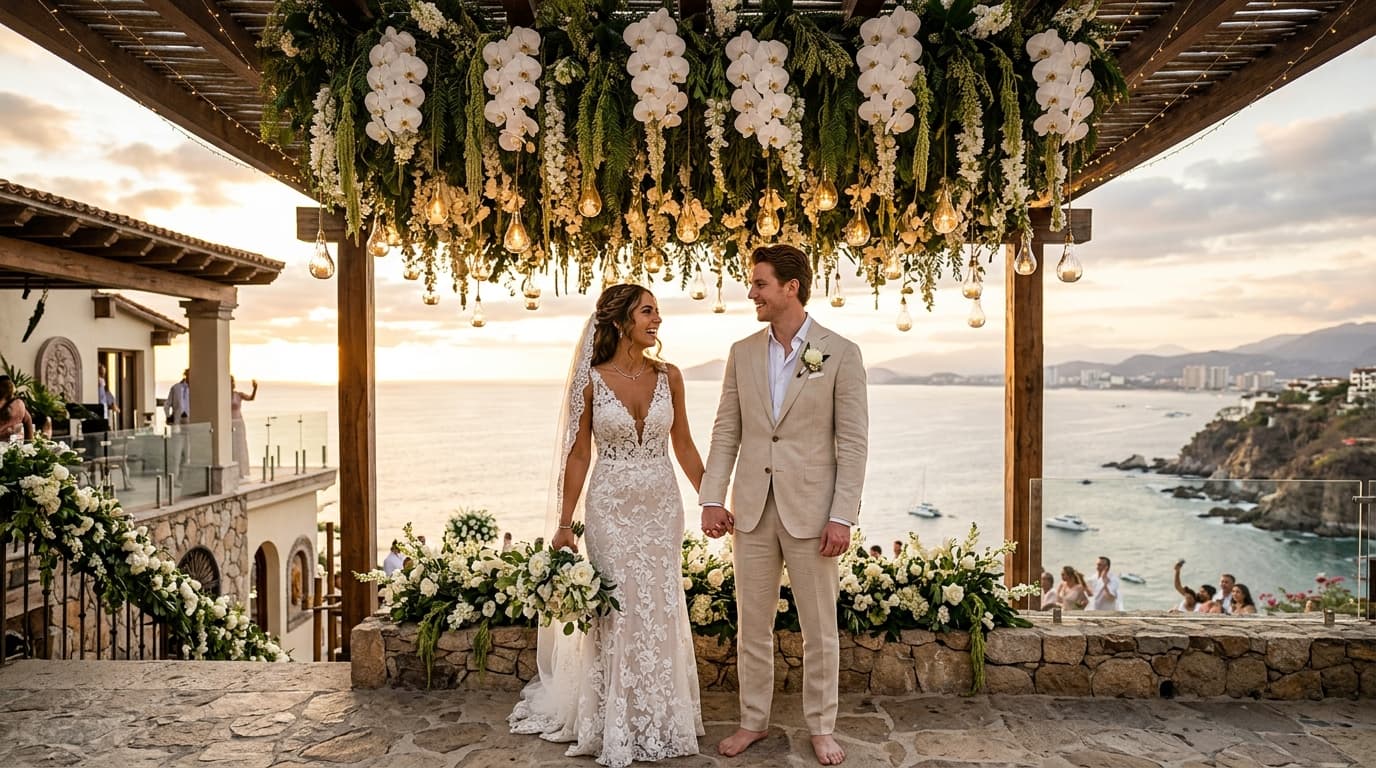
The Engineering Behind Overhead Luxury in Private Villa Estates
Modern high-concept luxury weddings in Puerto Vallarta have evolved beyond table-level floral design. Discerning couples now seek immersive, ceiling-suspended floral installations, oversized crystal chandeliers, and expansive kinetic lighting rigs that float seamlessly above outdoor dining terraces. However, executing these grand spatial concepts within private villa estates in neighborhoods like Conchas Chinas, Amapas, and Mismaloya requires far more than aesthetic vision—it demands rigorous structural engineering and specialized rigging architecture.
Unlike commercial resort ballrooms built with pre-engineered load points and steel trusses, private residential estates present unique structural parameters. Historic Mexican colonial architecture features hand-hewn parota wood beams, terracotta roof tiles, and natural river-stone masonry, while contemporary cliffside villas rely on post-tensioned concrete cantilevers. To safely suspend heavy decorative installations over dinner guests without compromising the structural integrity of the property or violating local safety codes, production teams must execute precision load calculations and custom structural engineering.
Evaluating Structural Load Capacities: Static vs. Dynamic Weights
The first critical phase in executing an overhead suspended design is a comprehensive structural assessment of the villa's architecture. Every suspended element exerts two distinct forces: static load (the baseline weight of the dry florals, steel frames, light fixtures, and cabling) and dynamic load (the additional force generated by moisture retention, wind vectors, and operational movements).
- Hydrated Floral Mass: Lush ceiling suspensions composed of foliage, orchids, and garden roses carry immense initial weight. More importantly, wet floral foam and organic stems retain water, adding significant weight. A floral canopy that weighs 400 pounds dry can easily reach 650 pounds once hydrated and hung.
- Banderas Bay Wind Dynamics: Coastal cliffside estates experience distinct diurnal thermal shifts. As afternoon ocean breezes give way to evening mountain drafts down the Sierra Madre valleys, wind pressure against hanging installations creates lateral sway and dynamic pull. Structural anchor points must be rated to withstand dynamic lateral force, not just downward gravity loads.
- Material Integrity Assessment: Structural engineers evaluate whether existing villa pergolas or overhanging eaves can support point loads. Historic parota wood beams must be inspected for grain density and structural soundness, while modern concrete slabs require digital rebar detection before temporary anchor placements can be considered.
Ground-Supported & Non-Invasive Rigging Solutions
To preserve the pristine finishes of high-end luxury villas in Puerto Vallarta, production crews often implement non-invasive rigging systems that bypass direct attachment to the villa’s permanent framework altogether. When roof structures cannot accommodate heavy point loads, master production designers engineer custom structural solutions.
1. Integrated Truss Goalpost Systems
When ceiling anchor points are unavailable or restricted by estate owners, production teams construct self-supporting aluminum truss goalposts or perimeter box trusses. To maintain the elevated luxury aesthetic, these structural aluminum frameworks are completely enveloped in custom architectural wrapping, hand-painted finishes, or natural creeping vines that mimic the villa’s natural landscape, seamlessly blending industrial strength with biophilic luxury.
2. Cantilevered Tension Rigging
For open-air terraces overlooking the Pacific Ocean where ground supports would obstruct ocean views, specialized riggers utilize counter-weighted cantilever systems. Heavy steel baseplates are positioned out of sight behind structural walls or service corridors, balancing suspended decorative spans across the main dining area via high-tensile aircraft cables and tension turnbuckles.
3. Non-Destructive Compression Clamps
Where structural beams are exposed and capable of bearing weight, riggers utilize non-destructive, rubber-lined friction clamps. These custom-engineered brackets securely grip hand-carved wood or stone beams without drilling, screwing, or marring delicate sealed surfaces, satisfying the strict architectural preservation requirements of Puerto Vallarta's premier historic properties.
Power Distribution and Electrical Infrastructure for Overhead Rigs
Overhead installations are rarely purely floral; they frequently integrate complex low-voltage ambient lighting, motorized chandeliers, or custom pendant arrays. Integrating high-draw electrical elements into a private estate’s existing power grid requires specialized distribution protocols.
Residential electrical circuits in coastal Jalisco are typically designed for standard home appliances, not high-amperage event production loads. Plugging extensive lighting rigs into standard villa outlets risks tripping breakers mid-reception or causing voltage drops that can damage sensitive dimming equipment. Luxury event producers mitigate this by deploying dedicated secondary distribution boxes connected directly to the estate's main electrical panel or by supplying ultra-quiet, low-emission auxiliary generators positioned strategically downhill to maintain silent, uninterrupted power.
Safety Protocols, Load Audits, and Execution Timeline
Engineering a flawless suspended installation demands a strict operational timeline and rigorous safety protocols on site:
- Pre-Production Load Calculations: At least 60 days prior to the event, the rigging designer submits a complete weight-distribution plan, calculating structural point loads and rigging hardware safety margins (maintaining a minimum 5:1 safety factor for all overhead hardware).
- Certified Rigger Oversight: Installation must be executed by certified ETCP (Entertainment Technician Certification Program) riggers or local structural specialists accustomed to marine-grade rigging hardware (Type 316 stainless steel to prevent salt-air corrosion).
- Load Testing & Safety Audits: Once the structural framework is erected and loaded, the lead engineer conducts a formal stress test and safety walk-through before florists begin detailed design work.
- De-Rigging Protocols: Post-event strike plans are executed with equal precision, ensuring heavy equipment is safely dismantled and lowered using controlled chain hoists without disturbing the estate grounds or surrounding native flora.
By treating overhead event design as an discipline of architectural engineering, Vallarta Vows turns ambitious spatial concepts into safe, breathtaking realities—elevating private villa celebrations high above the shores of Puerto Vallarta.