
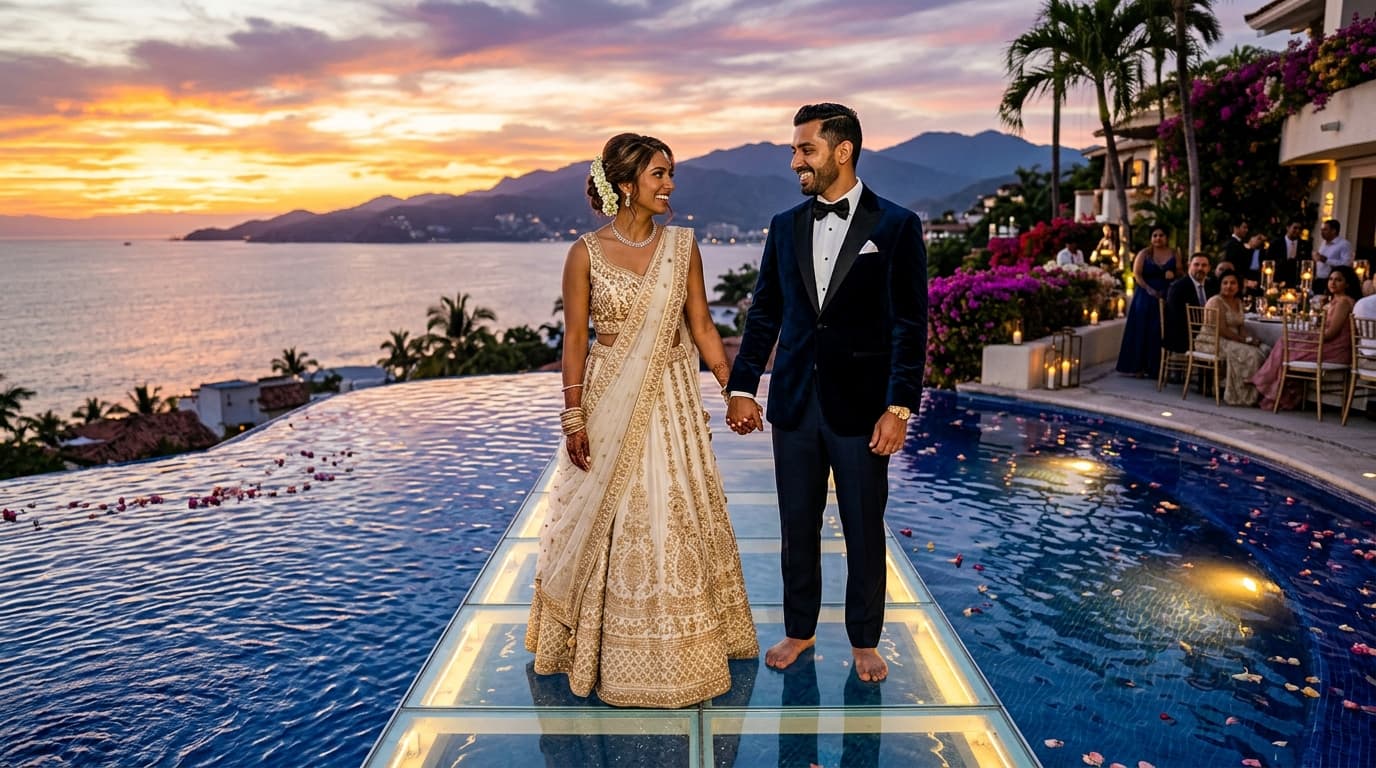
Architectural Spatial Maximization in Oceanfront Estates
In the dramatic topography of Puerto Vallarta’s most coveted residential enclaves—such as Conchas Chinas, Amapas, and the exclusive hillside enclaves of Mismaloya—private luxury villas are celebrated for their striking cantilevered terraces and infinity-edge pools. However, these architectural water features often occupy up to 60 percent of an estate's primary ocean-facing footprint. For high-concept luxury weddings requiring expansive guest seating, full-orchestra setups, or custom structural ceremony altars, the pool becomes both the property's greatest aesthetic asset and its primary spatial bottleneck. Deploying hydro-structural glass pool overlays converts these aquatic centerpieces into usable, load-bearing floor space without obscuring the turquoise depths below or interrupting sweeping sunset vistas across Banderas Bay.
Structural Load-Bearing Requirements and Substructure Framing
Executing a glass pool covering over a residential infinity pool in Puerto Vallarta demands rigorous structural engineering that accounts for both static loads (dining tables and elaborate floral installations) and dynamic loads (dancing guests and production rigging). Private estate transformations must adhere to strict structural integrity metrics while accounting for local coastal humidity and pool basin geometry.
Subframe Engineering: Marine-Grade Alloy Selection
Standard steel trussing succumbs rapidly to Puerto Vallarta's warm, saline air. High-production villa transformations require custom-milled, heavy-duty 6061-T6 structural aluminum or 316 marine-grade stainless steel support grids. These sub-structures rest on specialized neoprene isolation pads distributed along the pool's interior perimeter ledge and deep-end floor, preventing structural damage to delicate underwater tiles, glass mosaics, or waterproof plaster membranes.
Surface Panel Dynamics: Tempered Glass vs. High-Grade Cast Acrylic
- Laminated Tempered Glass: Composed of triple-layered, heat-strengthened glass panels bonded with interlayers of high-impact polymer. Glass provides ultimate optical clarity, scratch resistance against formal footwear, and near-zero deflection under concentrated weight.
- Optical Cast Acrylic: Ideal for complex curved pool shapes common in historic Conchas Chinas estates. High-density cast acrylic offers structural flexibility and light weight, though it requires specialized anti-scratch coatings to endure heavy foot traffic.
- Load Capacity Benchmarks: Structural overlays must be engineered to support a minimum live load capacity of 100 pounds per square foot (PSF) for seated banquet arrangements, increasing to 125 PSF for designated dancefloor zones to comfortably absorb synchronized dynamic impact.
Structural Integration for Multi-Faith Ceremony Altars
A transparent pool platform unlocks creative possibilities for ceremony layouts that were previously impossible on narrow hillside terraces. Floating structural stages allow couples to anchor grand architectural elements—such as modern geometric mandaps, lush floral arches, or traditional chuppahs—directly over the water.
Elevated Focal Points over Banderas Bay
Positioning a ceremony altar over the pool creates a dramatic visual effect where the couple appears to hover over the Pacific horizon. Structural points must be reinforced directly beneath the altar legs to handle localized weight loads from heavy floral frameworks or wooden pavilions. Custom rigging secured to the aluminum subframe ensures absolute stability against late-afternoon ocean winds sweeping across the bay.
Microclimate Control: Water Filtration and Thermal Condensation
Fully covering a heated oceanfront pool in Puerto Vallarta creates a self-contained microclimate beneath the platform. As night falls and ambient air cools against the Pacific ocean breeze, warm water vapor condenses on the underside of transparent panels, causing fogging that obscures underwater lighting and ruins optical transparency.
Hydrothermal Mitigation Protocols
To maintain crystal-clear visibility through the floor throughout the evening, production teams must execute strategic environmental controls:
- Water Temperature De-escalation: Villa pool heating systems must be completely deactivated 36 to 48 hours prior to platform assembly, bringing water temperatures down to match night-time ambient air baselines (typically 21°C to 24°C during peak wedding season from November through April).
- Sub-Surface Ventilation Channels: Engineered platform perimeters feature discrete perimeter ventilation gaps lined with fine micro-mesh. This facilitates constant air exchange between the water's surface and the atmosphere, preventing condensation build-up beneath the glass.
- Continuous Automated Circulation: Pool filtration pumps must run continuously on low-rpm variable settings to prevent stagnant water lines and maintain crystal-clear clarity without generating heavy turbulence that distorts underwater optics.
Aesthetic Integration and Subaquatic Lighting Schemes
A glass pool overlay should never look like temporary staging; it must read as a seamless, floating architectural extension of the villa's travertine or hand-carved stone terrace. Achieving a high-luxury finish requires harmonizing ambient terrace lighting with subaquatic illumination.
Subaquatic Engineering and Spatial Illumination
Standard pool lights are often too harsh when viewed through a clear dancefloor. Submerging custom IP68-rated, dimmable warm LED strip lighting along the interior frame perimeter projects a soft, diffused glow upward through the water. Incorporating submerged botanical arrangements—weighted orchids, floating candles secured beneath the glass, or suspended floral garlands—creates a mesmerizing three-dimensional depth beneath guests' feet during the reception.
Anti-Slip Traction Coated Finishes
Puerto Vallarta's evening coastal humidity can deposit subtle moisture on smooth glass surfaces. To ensure complete safety during high-energy celebrations, premium overlays receive a microscopic, optically clear anti-slip nanocoating. This treatment provides essential tactile friction for formal heels without compromising the glass clarity needed to view the illuminated water below.
Logistical Execution within Puerto Vallarta's Gated Topography
The physical delivery and assembly of heavy structural glass panels present distinct operational challenges in Vallarta’s exclusive residential sectors. Transporting multi-ton structural components through the narrow, winding cobblestone roads of upper Amapas or Sierra Del Mar requires meticulous micro-logistics management.
Rigging crews utilize specialized compact transport vehicles capable of navigating steep hillside inclines, followed by custom suction-cup lift systems to safely hand-carry glass panels through narrow villa entryways and courtyards. Assembly timelines must be scheduled across a multi-day installation window, ensuring rigorous load testing and clarity checks are completed before floral designers and furniture vendors begin setup. By combining precision hydro-engineering with creative spatial planning, luxury villa weddings in Puerto Vallarta transform structural obstacles into unforgettable architectural statements high above the coast.