
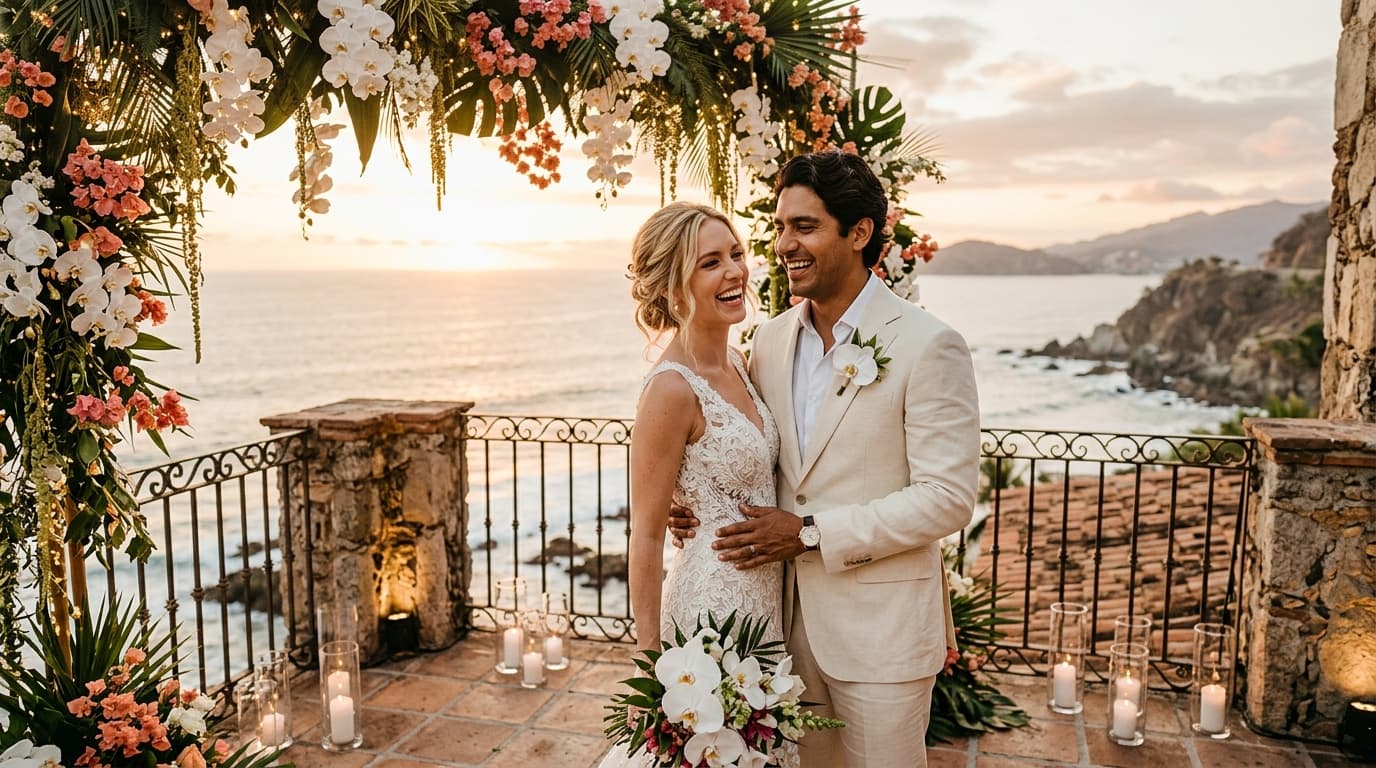
The Delicate Equilibrium of Luxury Transformation and Heritage Preservation
Puerto Vallarta’s private estate landscape is defined by architectural grandeur, ranging from mid-century modern cliffside marvels in Conchas Chinas to storied Spanish Colonial and Neoclassical estates in Amapas and Gringo Gulch. These historic villas offer an incomparable romantic aesthetic, characterized by hand-carved Cantera stone pillars, artisanal Talavera ceramic accents, aged timber pergolas, and centuries-old Saltillo tile terraces. However, executing a contemporary, ultra-luxury wedding transformation within these sensitive environments demands an elevated technical approach. Achieving high-concept design—such as custom suspended floral ceilings, expansive elevated staging, and heavy structural lighting rigs—requires rigorous architectural conservation protocols to ensure the estate’s historic integrity remains completely uncompromised.
Understanding the Architectural Vulnerabilities of Coastal Heritage Estates
Historic properties throughout Puerto Vallarta’s South Zone feature materials that possess unique physical vulnerabilities, particularly when exposed to tropical humidity and heavy structural loads. Understanding these material science nuances is critical before introducing event production infrastructure:
- Porously Soft Cantera Stone: Volcanic Cantera is ubiquitous in historic Mexican architecture, beloved for its soft texture and subtle color variations. However, its high porosity makes it susceptible to chipping, spalling, and staining from unbuffered point loads, heavy steel hardware, or oil-based floral fluids.
- Hand-Fired Terracotta and Saltillo Tile: Unlike modern vitrified porcelain, authentic hand-fired Saltillo tiles lack uniform density and structural sheer strength. Direct impact, concentrated localized weight from heavy furniture legs, or improper temporary flooring underlayment can cause sub-surface cracking.
- Lime-Based Plaster and Historic Stucco: Traditional lime plaster walls found in historic Centro and Gringo Gulch villas do not accept standard mechanical fasteners or adhesive tapes without risking permanent delamination of the historic surface coating.
- Aged Hardwood & Parquet: Tropical timber elements like Parota and Higuera require strict humidity controls and zero-scratch protection protocols during large-scale production setup.
Zero-Penetration Structural Anchoring and Ballast Systems
Traditional event production relies heavily on mechanical anchoring—drilling into walls, anchoring into concrete, or tensioning against permanent structural columns. Within a heritage villa, these methods are strictly unacceptable. Senior wedding strategists must employ high-level structural engineering principles utilizing non-invasive overhead rigging and ballast distribution frameworks.
Self-Supporting Truss Architecture
To suspend elaborate floral installations, crystal chandeliers, or intelligent moving lights over a courtyard or terrace, production teams construct independent, self-supporting perimeter trusses. These ground-supported structural frames distribute weight down to non-damaging base plates rather than applying lateral tension or vertical loads onto historic villa walls or timber pergolas. Ground trusses are seamlessly cloaked in custom fabric, architectural drywall wrapping, or local flora to merge invisibly into the aesthetic context.
Counterweighted Ballast Systems
When cantilevered structures or custom shade canopies are required along cliffside oceanfront terraces in Conchas Chinas, structural balance is achieved through concealed counterweight systems. High-density water ballast tanks or custom steel weights are positioned over load-bearing structural beams of the estate. These ballasts are mounted on neoprene distribution pads, guaranteeing wind resistance against Pacific coastal gusts without inserting a single mechanical anchor into the estate’s masonry.
Protective Sub-Floor Overlays and Load Distribution Engineering
Transforming uneven historic courtyards or delicate interior tile floors into level, high-density dance floors or dining platforms requires custom sub-floor engineering. Placing temporary staging directly onto historic Saltillo or hand-carved stone causes point-load concentration that can fracture underlying tiles.
High-Density Neoprene and Foam Buffer Layers
Before any timber framing or steel sub-structure touches the estate floor, a continuous buffer layer of high-density closed-cell neoprene sheeting is laid down. This material absorbs micro-vibrations, resists moisture accumulation under the sub-floor, and evenly distributes point weight across a broader surface area, insulating delicate historic tiles from direct pressure.
Floating Deck Systems
Utilizing modular adjustable-height pedestal systems paired with marine-grade exterior plywood, engineers construct a perfectly flat floating deck over historic steps, lawn slopes, or pool decks. This approach ensures that guest foot traffic and heavy production gear remain suspended above the original floor surfaces, providing complete protection while expanding the villa’s functional event footprint.
Navigating Local Heritage Compliance and Municipal Guidelines
Executing high-level events in historic areas of Puerto Vallarta demands intimate knowledge of municipal urban development frameworks and local heritage protection guidelines. Villas situated within protected zones require meticulous operational planning:
- Load-In and Micro-Access Management: Historic neighborhoods like Gringo Gulch feature narrow, cobble-paved streets and steep inclines. Logistics plans must utilize customized fleet transfers—transitioning materials from large transport vehicles in Zona Romántica to specialized compact transport vehicles capable of navigating historic streets without damaging overhead utility lines or narrow historic archways.
- Acoustic Isolation from Historic Masonry: Solid stone structures reflect low-frequency sound waves. Integrating directional acoustic arrays directs audio inward toward guest spaces and away from surrounding historic residential structures, ensuring municipal compliance without compromising guest experience.
- Environmental Chemical Protocols: Strict prohibition of chemical adhesives, non-neutral cleaning solvents, or unbuffered acidic floral preservers protects porous stone surfaces and local runoff water flowing down toward Banderas Bay.
The Result: Uncompromising Modern Luxury Rooted in Historic Elegance
By blending high-concept architectural design with rigorous engineering conservation, private estate weddings in Puerto Vallarta achieve an unprecedented level of sophistication. Couples are granted the rare luxury of celebrating within a timeless historic sanctuary—surrounded by sweeping views of the Pacific Ocean and authentic Mexican craftsmanship—while enjoying modern structural installations, bespoke lighting, and flawless spatial design that honors the past as impeccably as it celebrates the future.