
The New Era of Villa Gastronomy: Beyond Traditional Destination Catering
In the realm of ultra-luxury destination weddings, the dining experience has evolved from a secondary schedule item into the central narrative of the evening. When hosting an intimate or grand celebration within a private residential estate in Puerto Vallarta—whether perched high on the lush cliffs of Amapas or sprawling along the secluded coastline of Sierra del Mar—the wedding feast serves as a deep immersion into regional culture, artisanal design, and contemporary culinary craft. Transforming a private luxury estate into a world-class, pop-up fine dining restaurant requires a sophisticated blend of executive chef partnerships, bespoke spatial layout, and precise climate management.
Unlike hotel ballrooms or resort banqueting halls equipped with commercial walk-ins and subterranean service corridors, private villas demand an architected approach to food and beverage production. To deliver an uncompromised, seven-course tasting menu paired with rare regional spirits under the warm Pacific stars, luxury wedding planners and discerning couples must orchestrate back-of-house logistics with the same meticulous care applied to tablescape aesthetics.
Navigating Estate Infrastructure: Crafting the Satellite Kitchen
The primary residential kitchen of a luxury villa, while often appointed with high-end domestic appliances, is rarely designed to execute simultaneous multi-course plated service for fifty to one hundred and fifty guests. Achieving Michelin-caliber timing and temperature precision necessitates the construction of an ephemeral satellite prep kitchen, discreetly hidden from guest sightlines yet seamlessly connected to the dining terrace.
1. Power Distribution and Heavy Culinary Equipment
High-capacity convection ovens, induction burners, commercial refrigeration units, and specialized plating lamps require dedicated, stable electrical feeds. In areas like Upper Amapas or the southern coastal corridor near Boca de Tomatlán, running heavy culinary production on residential circuits risks unexpected breaker trips. Luxury production teams must integrate whisper-quiet digital generators and commercial-grade power distribution boxes specifically designated for the culinary team, entirely separate from lighting and entertainment audio rigs.
2. Thermal Integrity in Coastal Microclimates
Puerto Vallarta’s evening ocean breeze is divine for guests, but high humidity and ambient temperatures present specific challenges for delicate culinary presentations. Delicate emulsion sauces, hand-spun sugar work, dynamic ice sculptures, and fresh crudos require ambient temperature stabilization prior to service. Executive chefs utilize portable blast chillers and climate-controlled plating tents erected in shaded, well-ventilated staging zones immediately adjacent to the primary dining deck.
Designing the Sensory Table: Sourcing local Artisanship and Agave Pairings
A luxury villa reception dinner should reflect the rich bio-region of Jalisco and the Mexican Pacific. Moving past standard international banquet fare, high-concept villa menus highlight hyper-local sourcing, ancient techniques revitalized through modern gastronomy, and curated liquid pairings that go far beyond standard open bars.
The Multi-Sensory Agave & Spirit Journey
Elevate the traditional wine pairing by introducing an expert Maestro Tequilero or regional Catador to guide guests through a curated spirit journey. Jalisco is the heartland of Tequila, but local luxury celebrations also celebrate lesser-known regional treasures:
- Artisanal Raicilla: Sourced from the nearby Sierra Madre Occidental towns of San Sebastián del Oeste and Mascota, this botanical, wild-agave spirit provides an incredible pairing for rich mole or smoked seafood courses.
- Single-Estate Tequilas: Featuring rare extra-añejos poured into hand-blown Jalisco crystal, paired alongside dry-aged meats or artisanal Mexican chocolates.
- Small-Batch Mezcal: Infused with local botanical elements such as smoked hibiscus, lemongrass, or pink peppercorns harvested from regional valleys.
Catch-to-Table Pacific Seafood Concepts
The waters of Banderas Bay yield exceptional marine delicacies. Villa culinary programs can feature live raw bars stocked with local oysters, Pacific red snapper ceviche cured in fresh local key lime juice, and grilled spiny lobster caught hours prior by artisanal fisherman off the coast of Yelapa. Presenting these hyper-fresh ingredients on custom hand-carved volcanic basalt plates or artisanal glazed ceramics from Tonalá creates an undeniable sense of place.
Spatial Tablescape Design on Oceanfront Terraces
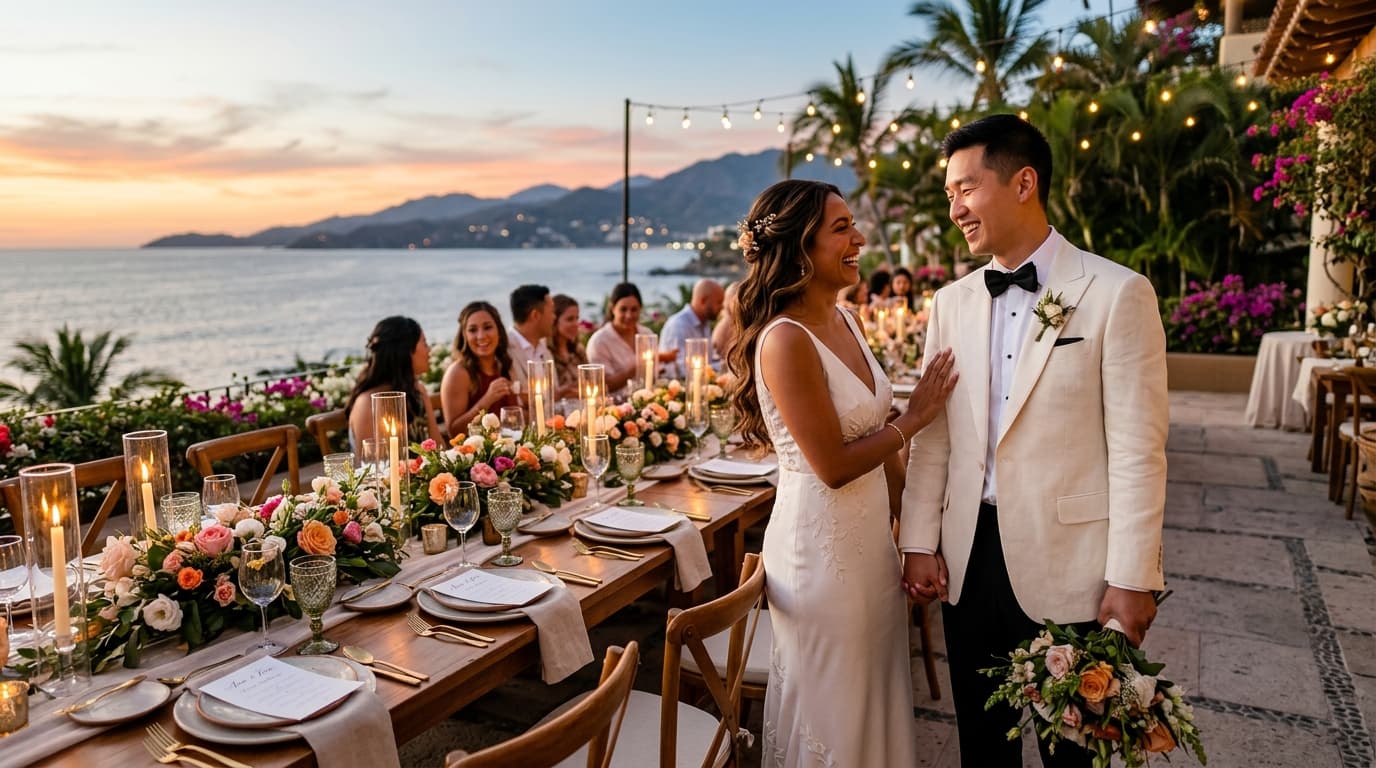
Setting an exquisite table on an open-air stone terrace overlooking the Pacific horizon requires an understanding of proportion, wind dynamics, and illumination architecture. The physical environment directly influences how food is perceived and enjoyed.
- Wind-Resistant Tablescape Architecture: Ocean breezes along the coastal cliffs intensify as the sun drops. Low-profile floral arrangements set in weighted bronze or stone vessels prevent tipping, while tall pillar candles must be protected within custom heavy-glass hurricane chimneys to maintain warm, flickering light without blowing out.
- Tactile Material Selection: Complement the natural travertine, parota wood, and hand-chiseled granite of Vallarta’s top villas with layered textiles. Heavy stone-washed Belgian linens, hand-loomed Mexican napkin wraps, and bespoke silver or brushed gold flatware ground the dining space with rich tactile contrast.
- Dynamic Lighting Layers: Avoid harsh overhead lighting. Instead, weave pinpoint warm LED pin-spots focused directly onto each guest’s plate from overhead pergolas, paired with dim ambient uplighting on nearby palm fronds and architectural stone walls. This ensures every plate looks artfully framed while maintaining an intimate, candlelit ambiance.
Preserving Residential Elegance: Curfews and Service Discretion
Hosting an elite culinary event in an exclusive enclave like Conchas Chinas or Sierra del Mar requires strict adherence to local residential protocols. Elite service staff must operate with absolute discretion, using soft-close tray stands, muted service paths, and quiet breakdown procedures that allow guests to transition smoothly from dining to late-night lounge celebrations without disruptive cleanup noise.
Conclusion: Creating a Lasting Culinary Legacy
A bespoke villa wedding dinner in Puerto Vallarta is far more than a meal—it is an immersive performance of regional heritage, architectural harmony, and epicurean mastery. By investing in professional kitchen infrastructure, honoring local ingredients, and layering tablescapes with authentic Mexican craftsmanship, couples create an unforgettable evening that honors both the breathtaking landscape of Banderas Bay and the timeless joy of fine dining shared among cherished guests.