
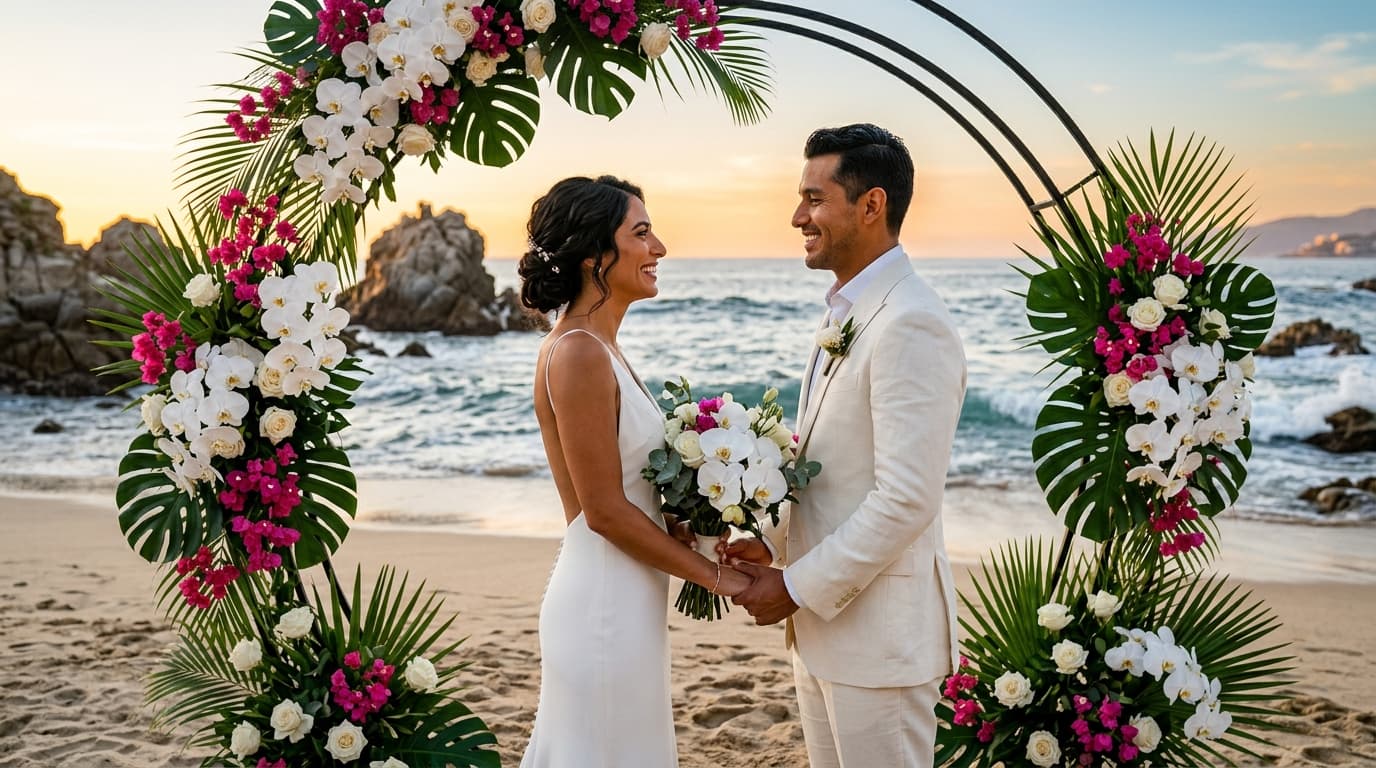
Navigating Microclimate Aerodynamics on Banderas Bay
The breathtaking topography of Puerto Vallarta—where the lush slopes of the Sierra Madre Occidental plunge into the warm waters of Banderas Bay—creates one of the most stunning wedding backdrops in North America. However, this dramatic convergence of mountain and sea also generates precise coastal meteorological patterns. As afternoon temperatures peak, thermal updrafts from the jungle inland pull cool air across the ocean surface, producing a predictable shift from mild shore-bound breezes to brisk coastal gusts, particularly between 3:00 PM and 6:00 PM—the exact window reserved for luxury sunset ceremonies.
For high-end event designers, executing an uncompromised structural vision along exclusive stretches like Conchas Chinas, Playa Las Gemelas, or Punta Mita requires moving beyond decorative floral design into the realm of structural aerodynamics. A soaring floral arch or modern structural canopy that stands impeccably indoors can quickly become a sail when exposed to open Pacific air currents. Securing these installations demands high-level engineering, discreet anchoring systems, and strategic botanical selection that respects Banderas Bay's dynamic climate.
Structural Foundations: Ballast Engineering and Counter-Weight Integration
Constructing a rigid, high-fashion ceremony altar directly on soft sand presents dual challenges: providing load-bearing stability without disturbing the natural coastal ecosystem, and preventing wind-induced tipping or shearing. Conventional weight bags and exposed sandbags undermine the elevated aesthetic required for high-luxe beach weddings. Instead, professional production teams employ concealed engineering systems tailored to Puerto Vallarta’s specific shoreline conditions.
- Dual-Stage Sand Augers: Heavy-duty, marine-grade steel augers are driven deep into the sand bed to reach compacted, high-density substrate, serving as unseen primary anchors for main upright posts.
- Integrated Steel Baseplates with Concealed Ballast: Custom-welded 3/8-inch steel baseplates form the footings. These are weighed down using low-profile, lead-core weight bricks submerged beneath the surface sand layer, completely hidden from guest view and camera angles.
- Internal Steel Cage Skeleton: Rather than relying solely on lightweight timber or hollow aluminum, structural mandaps and arches utilize internal powder-coated steel space frames wrapped in local tropical hardwoods like parota or native palm timbers to blend seamlessly with high-end decor.
Botanical Dynamics: High-Resistance Aerodynamic Floral Design
Floral installations along the shoreline face constant wind stress, which accelerates transpiration and mechanical wear on delicate petals. Selecting and conditioning botanical elements for high aerodynamic resistance ensures structural integrity and fresh visual impact throughout the ceremony and post-vow photography.
Selecting Wind-Resistant Pacific Flora
Fragile, multi-petaled blooms like garden roses or delicate hydrangeas can quickly lose form under sustained offshore gusts. Luxury floral directors operating in Puerto Vallarta favor robust, architecturally sound flora with high surface tension and low aerodynamic drag:
- Slipper Orchids and Phalaenopsis: Thick, waxy petals cut cleanly through air currents while retaining moisture under direct sunlight.
- Anthuriums and Ginger Gingers: Sculptural, high-gloss spathes provide vibrant color blocks without catching wind like ruffled petals.
- Subtropical Foliage (Monstera, Philodendron, and Travelers Palm): Flexible, leathery leaves deflect wind vectors seamlessly. Strategic perforations in natural Monstera leaves actually reduce wind resistance across large installations.
- Local Bougainvillea: Pliable, woody vines wrap structural frames securely, providing dense color that flexes naturally with coastal air currents rather than opposing them.
Hydro-Hydration and Stem Anchoring Protocols
To prevent stems from pulling free under wind shear, individual floral elements are secured into high-density aquatic floral foam blocks encased in reinforced wire mesh (chicken wire or architectural steel mesh). Every foam unit is saturated with hydro-retentive nutrient solutions and anchored directly to the steel internal frame using heavy-duty, UV-resistant mechanical ties. Spraying completed installations with anti-transpirant botanical sealants seals leaf stomata, reducing moisture loss caused by warm ocean winds.
Location-Specific Wind Vectors Across Banderas Bay
Understanding the microclimate variations across Puerto Vallarta’s distinct coastal zones allows planners to anticipate wind behavior and adjust altar orientation accordingly:
Conchas Chinas and the South Shore
Encased by granite rock formations and steep jungle hillsides, Conchas Chinas coves experience localized wind channeling. While larger Pacific swells are buffered, winds can funnel briskly through rocky gaps. Altars here benefit from being angled slightly toward the rock walls, utilizing natural granite formations as structural windbreaks.
North Shore and Punta Mita
Exposed directly to the open Pacific, the northern curve of Banderas Bay receives sustained, uniform wind vectors. Ceremonies positioned on wide, open beaches require lower center-of-gravity installations—such as crescent-shaped floor floral rings or heavily weighted asymmetric pillars—that allow wind to flow over and around the structures without creating lift.
Executing an Flawless Shoreline Aesthetic
Engineering a wind-resilient ceremony structure demands continuous collaboration between structural riggers, floral artists, and luxury wedding planners. By marrying precise physical engineering with localized botanical mastery, couples achieve an ethereal, floating shoreline aesthetic that stands secure against Banderas Bay’s natural elements—ensuring an unforgettable, high-fashion moment at the water’s edge.