
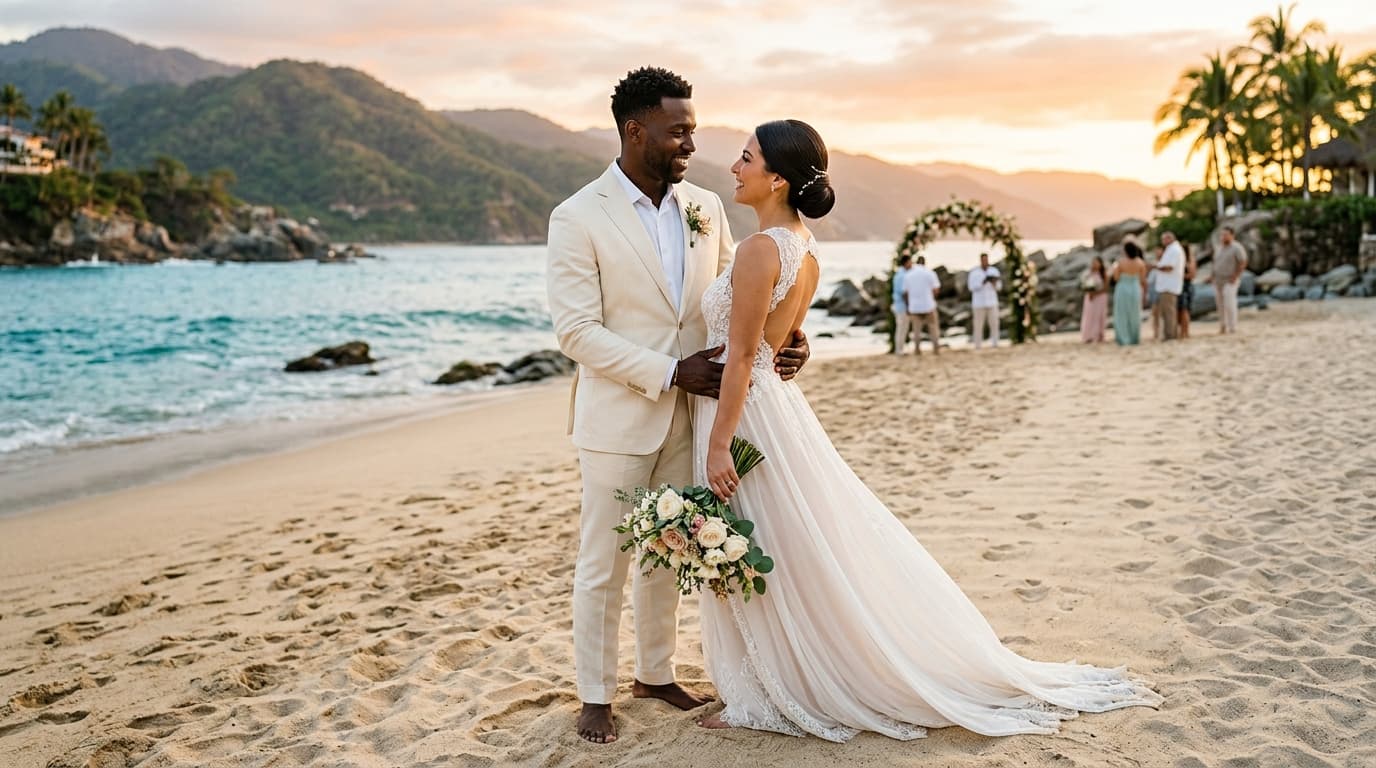
The Interplay of High Fashion and Banderas Bay Coastal Physics
Hosting a luxury beach wedding along the golden coast of Puerto Vallarta demands an uncompromising eye for aesthetics and an equally rigorous command of environmental logistics. While the dramatic contrast of the Sierra Madre mountains falling into Banderas Bay provides a peerless backdrop, the coastal microclimate presents distinct challenges for high-fashion wedding attire. High relative humidity, ocean-borne salt aerosols, and ambient thermal conditions can rapidly alter delicate silk weave tension, weigh down intricate tulle layers, and compromise crisp bespoke tailoring if not strategically managed.
For couples exchanging vows on the sands of Conchas Chinas or private South Shore enclaves, preserving the structural integrity and pristine finish of haute couture requires specialized textile knowledge. By understanding marine physics, deploying environmental control infrastructure, and selecting garment-fortification methods, planners can guarantee that garments look as impeccable during the golden hour processional as they did during initial fittings.
Understanding Puerto Vallarta's Marine Microclimates
Puerto Vallarta’s coastal air is dictated by the thermal engine of Banderas Bay. Between late afternoon and sunset, warm tropical air absorbs moisture from the ocean surface, pushing atmospheric humidity to ranges between 65% and 85%. This air, carrying microscopic saline particles, interacts immediately with exposed fabrics.
Humidity, Salinity, and Fabric Dynamics
Different fine textiles respond to coastal atmospheric elements in unique ways:
- Silk Gazar and Organza: Highly susceptible to moisture absorption. High relative humidity can soften the natural sizing within silk fibers, causing structured architectural pleats to lose crispness.
- Heavy Silk Mikado and Crepe: Absorbs ambient atmospheric moisture, increasing total garment weight and slightly lengthening hemlines over extended exposure.
- French Chantilly and Alençon Lace: Generally resilient, though delicate cotton-thread embroidery within lace can expand, creating subtle textural shifting if tensioned tightly over foundation garments.
- Bespoke Wool and Silk-Blend Suits: Natural animal fibers absorb water vapor rapidly. Unstructured or unvented jackets can lose their crisp canvas roll along the lapel when exposed to warm ocean breezes.
Microclimate Dressing Enclaves: Mobile Environmental Control
To shield couture garments from atmospheric moisture prior to the processional, luxury wedding planners set up specialized mobile environmental dressing enclaves directly adjacent to the shoreline venue. Whether hosting a wedding at a secluded villa in Las Caletas or an exclusive beachfront estate in Zona Romántica, establishing a controlled indoor atmosphere is essential.
Sub-Zero Dehumidification and Thermal Stabilization
Standard air conditioning units cool the air, but they do not always extract sufficient water vapor for high-value garment stabilization. High-luxe preparations require dedicated commercial-grade dehumidifiers operating within the primary dressing suite for at least six hours prior to stepping onto the sand. Maintaining a ambient room temperature between 68°F and 70°F with a relative humidity capped at 40% sets the textile fibers, locking in pressed creases and preserving structural boning.
Garments should remain suspended in these microclimate chambers until ten minutes before the final staging call. This minimizes the duration that untreated fine silk or custom canvas comes into direct contact with external coastal dew points.
Textile Fortification and Tailoring Strategies for On-Sand Couture
Proactive fashion styling for Banderas Bay weddings involves subtle structural adjustments made during final fitting stages. Working closely with master tailors and specialized bridal conservators ensures that design fidelity remains uncompromised on the shore.
Invisible Hydrophobic Treatments and Hem Elevation
To counteract capillary action—where dry sand and damp shoreline moisture travel up the hem of a gown—couture ateliers apply microscopic, non-silicone hydrophobic textile sprays to the lowermost underskirt layers. These specialized formulas seal individual fiber sheaths without altering the breathability, hand-feel, or motion of the fabric.
Furthermore, tailors routinely apply a micro-hem elevation protocol for Puerto Vallarta beach ceremonies. By raising the internal petticoats and lining fabrics by precisely one-quarter of an inch higher than the primary exterior lace or silk shell, the garment maintains the illusion of sweeping the sand while preventing lower structural layers from collecting heavy damp sand grains.
Tailoring Strategy: Breathable Structure for Menswear
For high-end groomswear, traditional heavy chest canvases should be swapped for lightweight, tropical-weave horsehair or partial canvassing. Utilizing unlined or half-lined jacket construction in high-twist wools, linen-silk blends, or bamboo-silk knits allows body heat to escape while preventing sea salt from trapping moisture against the interior suit lining. Double-vented jackets are preferred, as they allow coastal breezes to pass through the garment without distorting the silhouette during vows.
Logistical Timelines: From Preparation to Shoreline Recovery
Managing high-fashion garments on the beach requires a clear sequence of steps from pre-ceremony preparations to the evening reception transition.
- T-Minus 4 Hours: Execute steam pressing within the dehumidified enclave. Allow garments to hang freely for a minimum of two hours post-steaming to allow all heat and vapor to evaporate fully from the weave.
- T-Minus 30 Minutes: Apply finalized body hydration and fragrances. Allow skin to fully absorb oils and lotions before stepping into couture garments to prevent transfer to silk linings under humid conditions.
- T-Minus 10 Minutes: Unveil garments from protective breathable cotton garment bags within the environmental sanctuary. Proceed directly to the shaded staging point.
- Post-Ceremony Shoreline Recovery: Immediately following sunset portrait sessions along the surf, the couple transitions to an onboard attendant station equipped with micro-vacuum sand extraction tools and specialized fiber brushes to remove surface salt and sand before entering the main reception pavilion.
Curating Flawless Coastal Vows
By blending advanced garment preservation methods with a firm understanding of Puerto Vallarta's coastal microclimate, couples can comfortably wear world-class haute couture right at the water's edge. Strategic climate control, tailored fabric selection, and expert logistics allow high-fashion wedding attire to look crisp, elegant, and effortless against the stunning backdrop of Banderas Bay.