
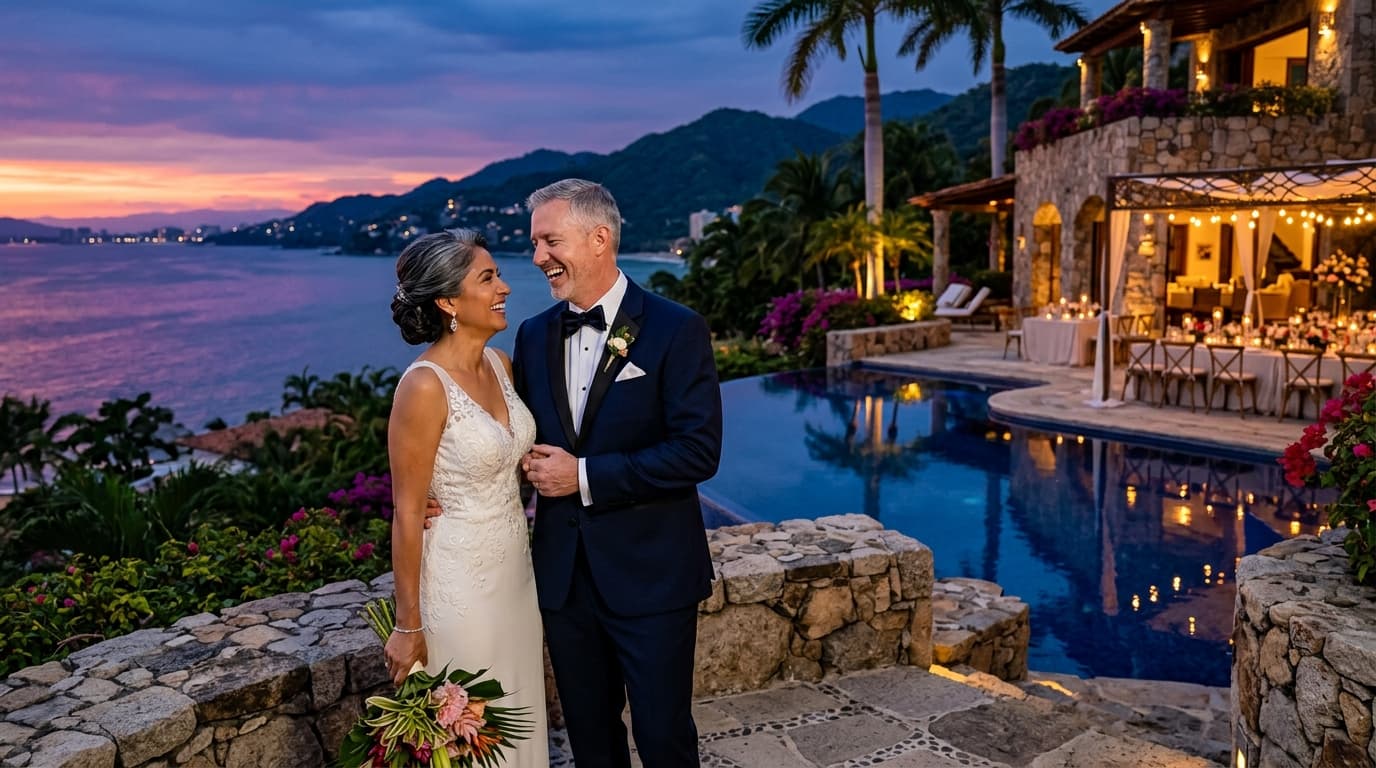
The Art of the Twilight Transition in Oceanfront Estates
In the luxury wedding sanctuaries of Puerto Vallarta—where multi-tiered estates cling dramatically to the granite cliffs of Conchas Chinas and Amapas—sunset is not merely an event; it is a dramatic architectural pivot. As the sun dips behind the horizon of Banderas Bay, the ambient natural light collapses within twenty minutes, plunging expansive stone terraces and jungle-backed infinity pools into darkness. Without a deliberate, high-design nocturnal lighting plan, even the most spectacular multi-million-dollar private villa risks losing its structural grandeur and spatial intimacy once night falls.
Designing nocturnal illumination for an oceanfront villa wedding demands far more than hanging string lights. It requires a sophisticated synthesis of structural engineering, marine-grade electrical safety, color temperature theory, and local municipal awareness. To transform a private residential property into a luminous, high-contrast evening venue, luxury planners and design teams must orchestrate light to highlight raw coastal materials, preserve ocean views, and ensure seamless guest navigation across complex, multi-level topographies.
The Electrical Grid: Engineering Power for Complex Villa Illumination
The primary hurdle when illuminating private estates along Puerto Vallarta’s South Shore is residential electrical capacity. While luxury villas in enclaves like Sierra del Mar or Lower Conchas Chinas are built with generous residential power grids, they are rarely equipped to handle the heavy electrical draws required by high-output architectural uplighting, professional catering equipment, live entertainment audio, and high-capacity climate systems simultaneously.
To prevent blown circuit breakers during key moments, professional wedding production teams implement dedicated power architecture using ultra-quiet, diesel-powered twin generators (typically 45kVA to 70kVA). These units are strategically positioned at street level or within service driveways, away from guest reception areas, with heavy-duty feeder cables routed through covert utility conduits or elevated cable ramps concealed by lush tropical landscaping.
- Phase Load Balancing: Distributing lighting, sound, and catering services evenly across isolated circuits prevents voltage drops that cause subtle light flickering in film and high-end video recording.
- Marine-Grade IP65 Fixtures: Oceanfront moisture, heavy ocean spray, and high Pacific coastal humidity degrade standard interior lighting gear. Professional installations utilize sealed, IP65-rated outdoor fixtures equipped with corrosion-resistant brass or coated aluminum housings.
- Discreet Wire Management: In residences paved with local cantera stone, carved marble, or traditional saltillo tile, running cables requires custom gaffer channeling, low-profile rubber matting, or custom-painted wooden cable runs painted to match the estate's stonework.
Topographical Uplighting: Artful Integration of Jungle and Ocean
One of the unique challenges of evening villa receptions in Puerto Vallarta is the vertical dark wall created by Banderas Bay after dusk. Unlike urban venues with city light backdrop, oceanfront terraces face a vast, pitch-black sea. To counteract this visual void, lighting designers utilize selective topographical uplighting, sculpting the surrounding environment to create depth, drama, and perspective.
By casting narrow-beam LED fixtures upward into the towering canopy of native *parota* trees, Royal Palms, and cascading bougainvillea framing the villa's perimeter, the estate gains a dramatic natural ceiling. The textured granite rock faces that anchor cliffside villas in Mismaloya and Boca de Tomatlán become illuminated sculptural backdrops when grazed with low-angle warm light, highlighting the organic beauty of the Mexican Pacific coast.
Preserving the Midnight Water Line
Rather than leaving the ocean completely invisible, skilled designers direct wide-angle underwater illumination within oceanfront infinity pools and strategically position warm spotlighting across breaking waves near lower terrace edge lines. This technique retains the hypnotic texture of moving water, visually connecting the elevated reception space to the sea below without washing out the natural starlight above.
Color Temperature and Atmosphere: Radiance in Warm Kelvin Spectra
Lighting high-end residential spaces requires an acute understanding of Kelvin (K) color temperatures. Cold, blue-hued lighting (4000K and above) strips warm tones from natural materials like terracotta, dark hard woods, and natural beige limestone, while casting unflattering cool tones onto human skin. For luxury wedding celebrations, professional lighting designers strictly operate within a warm spectrum of 2200K to 2700K.
This ultra-warm range emulates the soft, golden radiance of candlelight, enhancing rich bronze skin tones and bringing out the natural beauty of custom floral installations. Key tablescape elements—such as crystal glassware, fine linen, and hand-blown Mexican glass accent pieces—are subtly highlighted using dimmable architectural pin-spots hidden in overhead timber pergolas or temporary trussing wrapped in native foliage.
- 2200K (Candlelight Amber): Ideal for perimeter lanterns, ground-level pathway lighting, and decorative table accents.
- 2700K (Soft Golden White): The gold standard for facial key-lighting, dance floor overheads, and architectural uplighting against stone walls.
- Dynamic DMX Dimming: All light sources should be tied to a centralized DMX control system, allowing the production crew to seamlessly transition the atmospheric intensity from energetic dinner toasts down to a warm, moody club aesthetic for late-night dancing.
Safety, Wayfinding, and Municipal Sound-Light Harmony
Multi-tiered oceanfront estates feature inherent navigational risks at night: steep stone stairways, drop-offs near cliff edges, and wet pool decks. Ambient decorative light must be seamlessly balanced with invisible architectural wayfinding. Low-voltage, warm LED tape light concealed beneath cantilevered stair treads and stone benches provides clear path guidance without overwhelming the aesthetic decor.
Furthermore, operating in residential neighborhoods like upper Amapas requires compliance with local municipal noise regulations and neighborhood association protocols (HOAs). While sound containment is a critical focus, direct light pollution must also be managed. Beam angles must be tightly controlled using barn doors and honeycombed louvers to ensure light spill does not invade adjacent residential properties, allowing your private estate celebration to remain exclusive, beautiful, and completely undisturbed late into the night.